3 bedroom vs 4 bedroom: what should you choose for your first home?
Three bedrooms or four?
It sounds like a fairly straightforward decision until you start comparing floorplans and realise the extra bedroom can affect the size of your living areas, the block you need, your budget and how the rest of the home works.
For some first home buyers, a fourth bedroom is genuinely useful. For others, three bedrooms and a little more space somewhere else makes much more sense.
There is no magic number of bedrooms a first home should have. The better question is what you would actually do with them.
Start with who will live in the home
Before thinking about resale, future children or whether four bedrooms simply sounds better, start with your household now.
Ask yourself:
If you are buying alone or as a couple, three bedrooms can already give you quite a bit of flexibility.
One room might be your bedroom, another a guest room and the third an office. If your household is larger or you know you will need another permanent bedroom, four may be the more practical choice.
What do you get with a 3 bedroom home?
A three-bedroom home can be a good fit when you want the essentials without using more floor area than you need.
Depending on the design, it may allow you to put more of your budget or available space towards things like:
It can also open up more options if you are considering a smaller or narrower block.
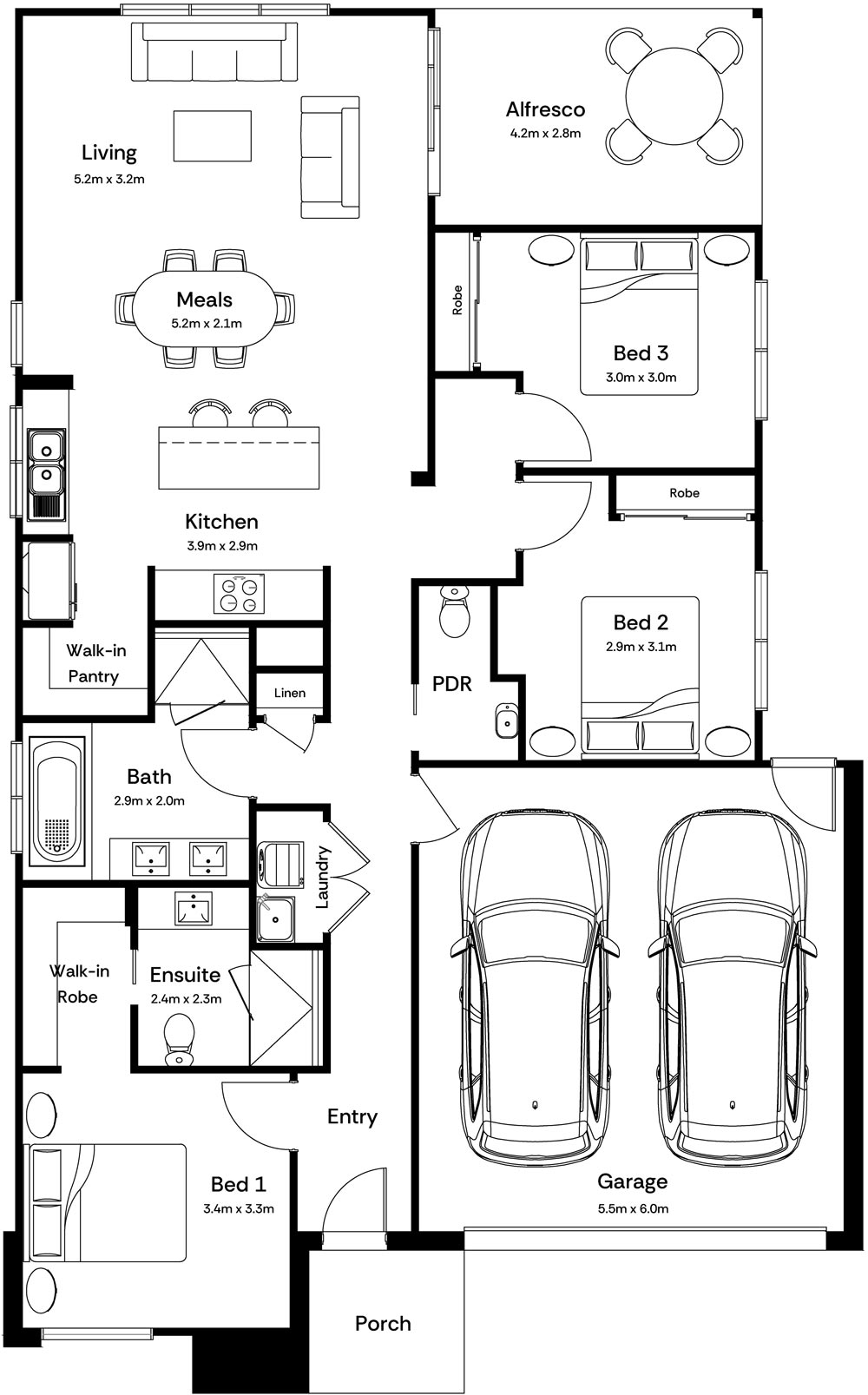
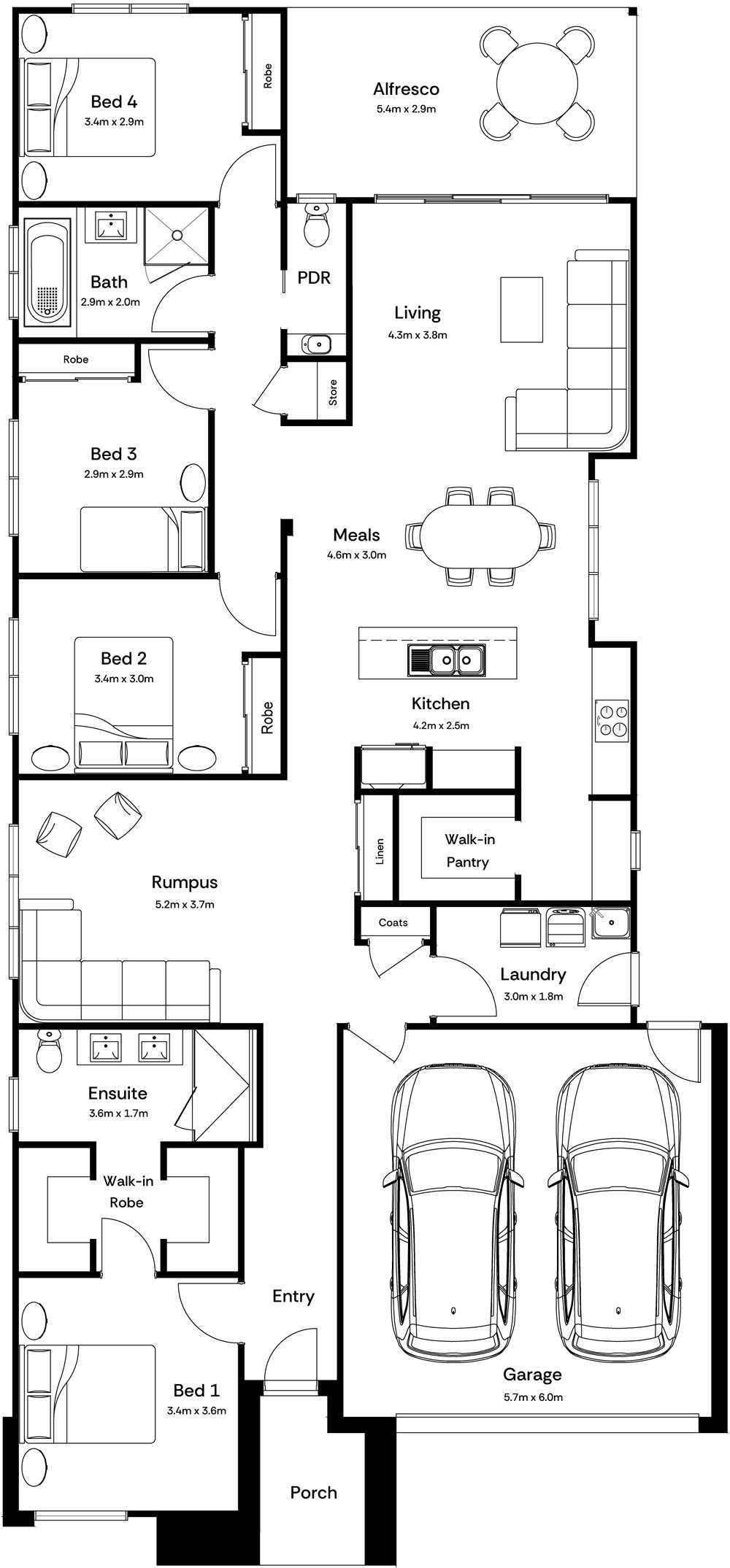
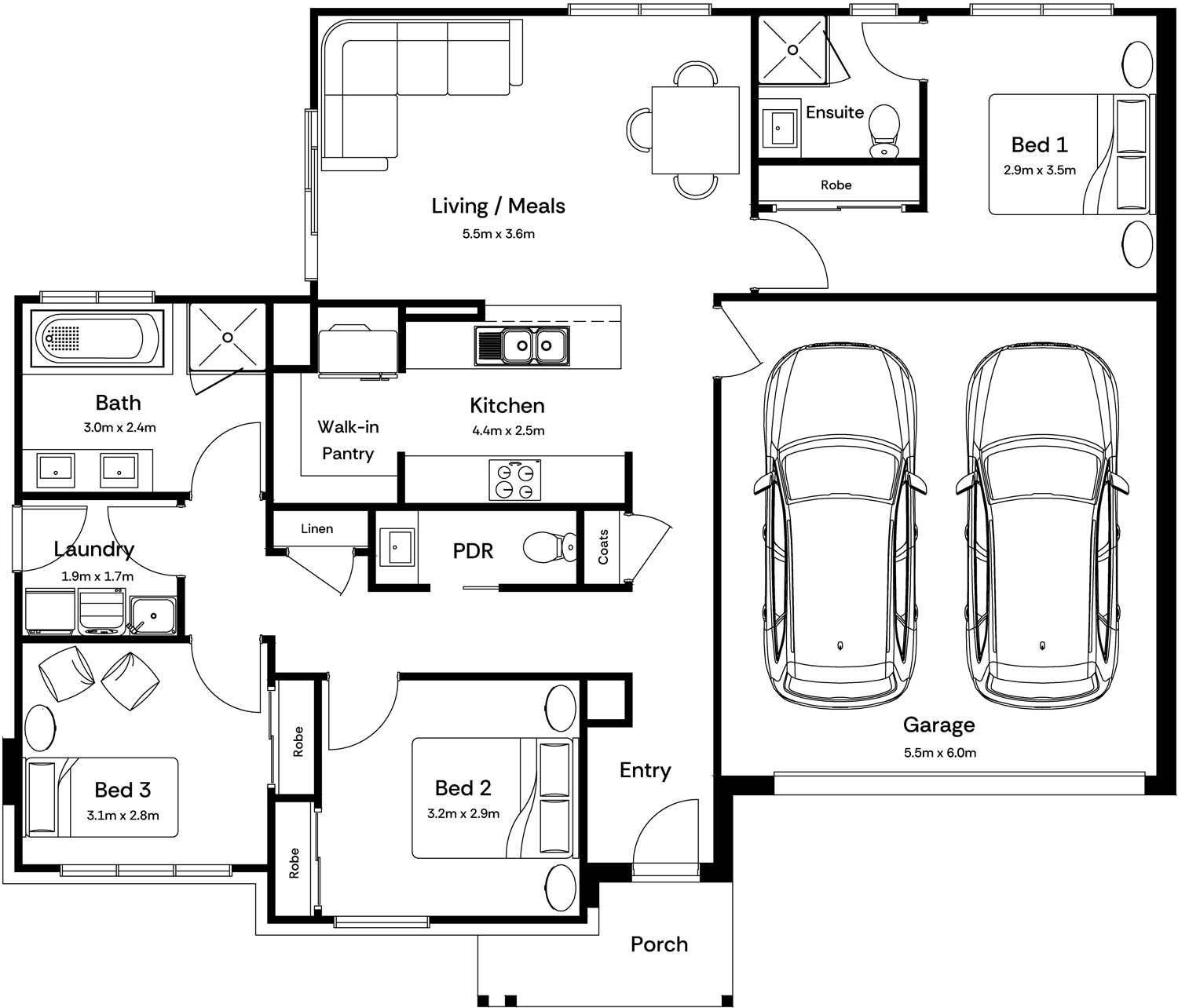
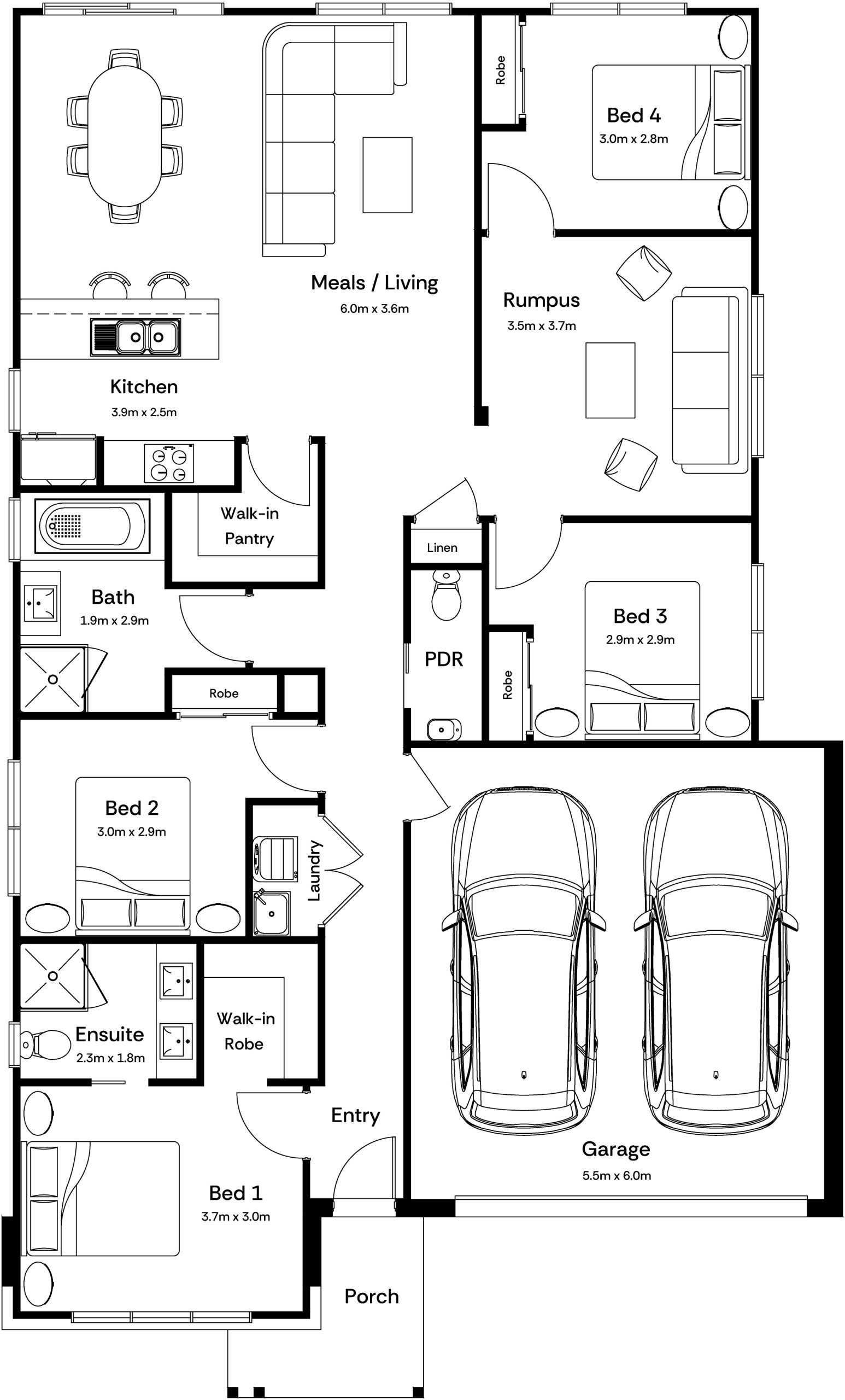
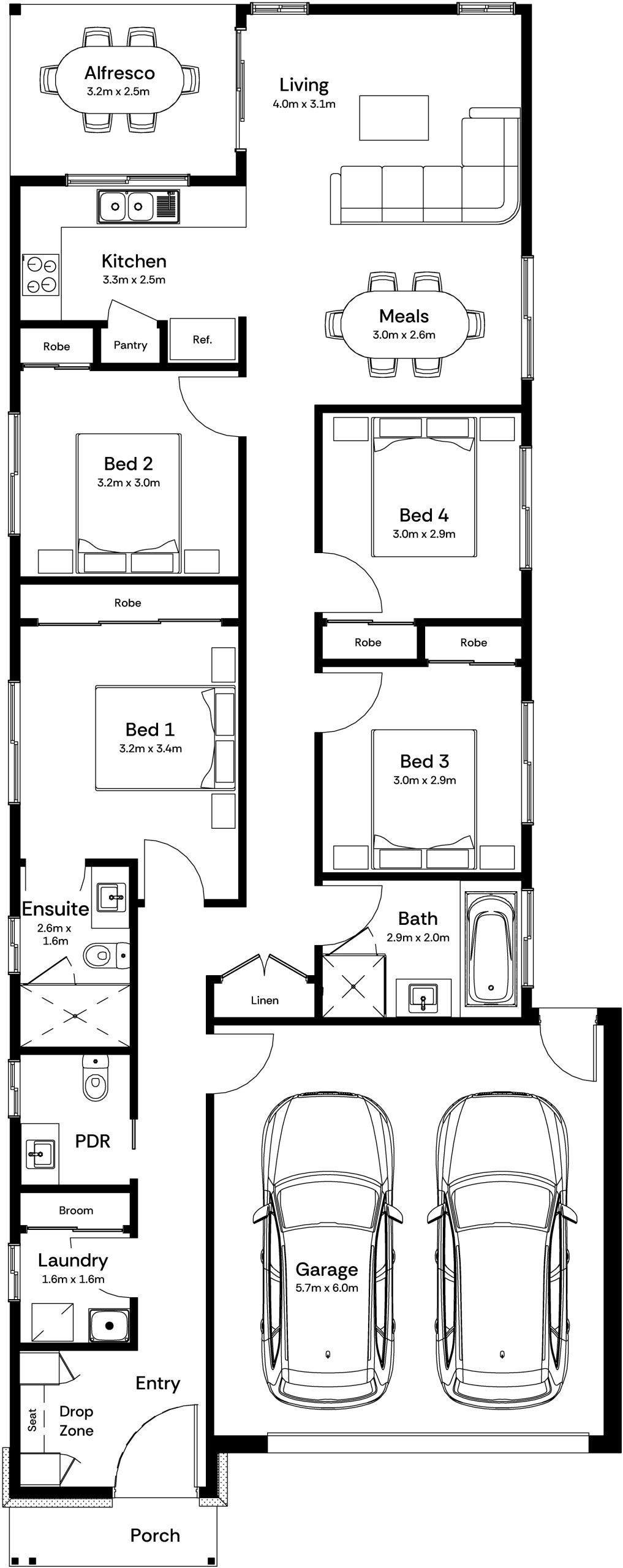
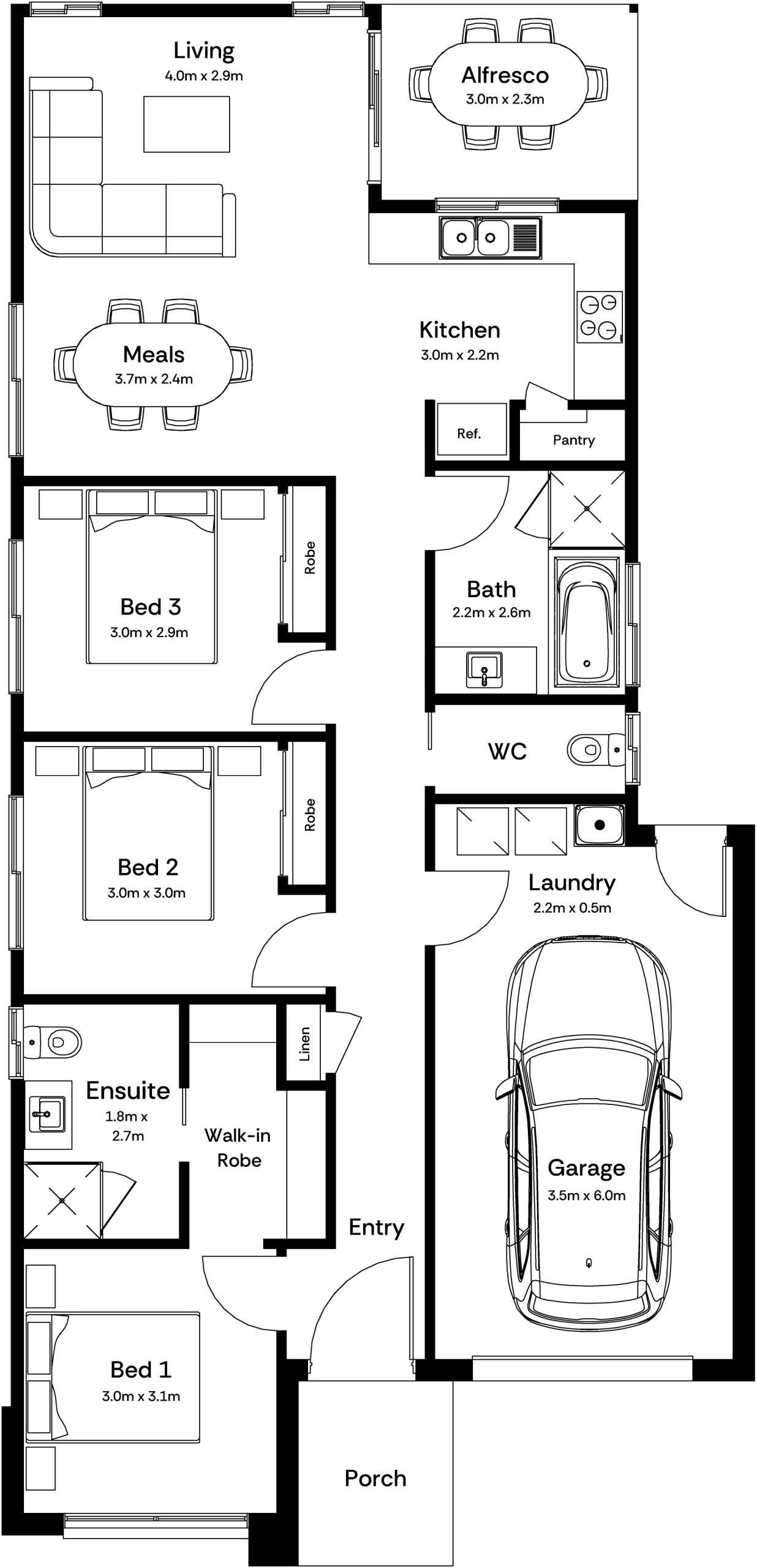
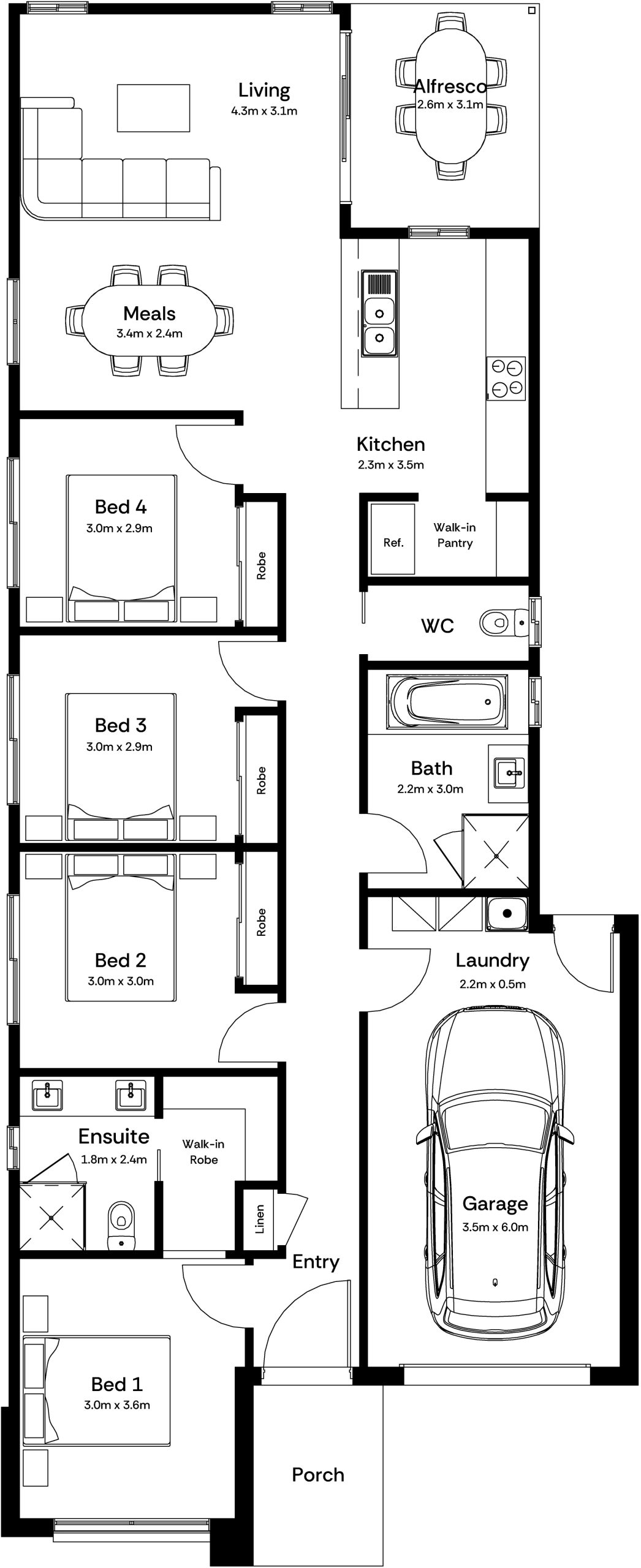
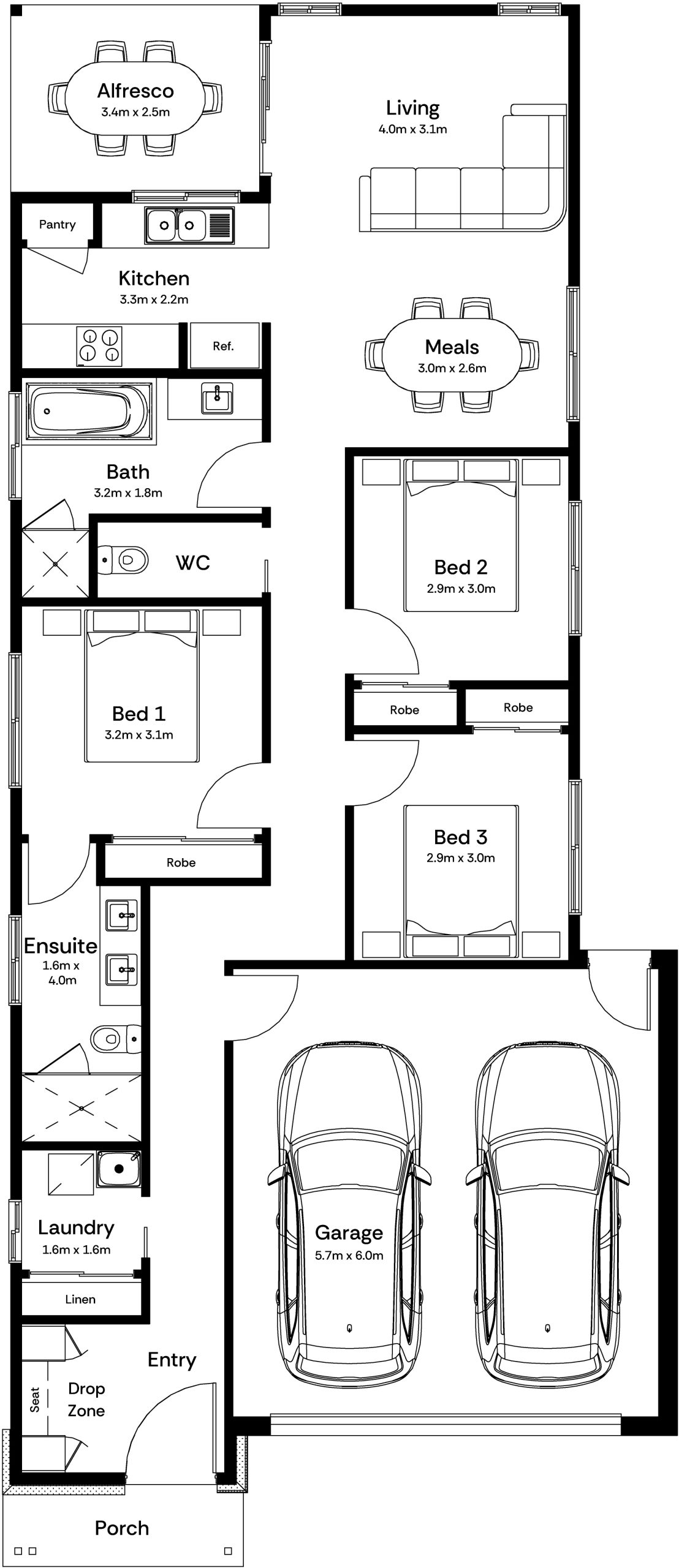
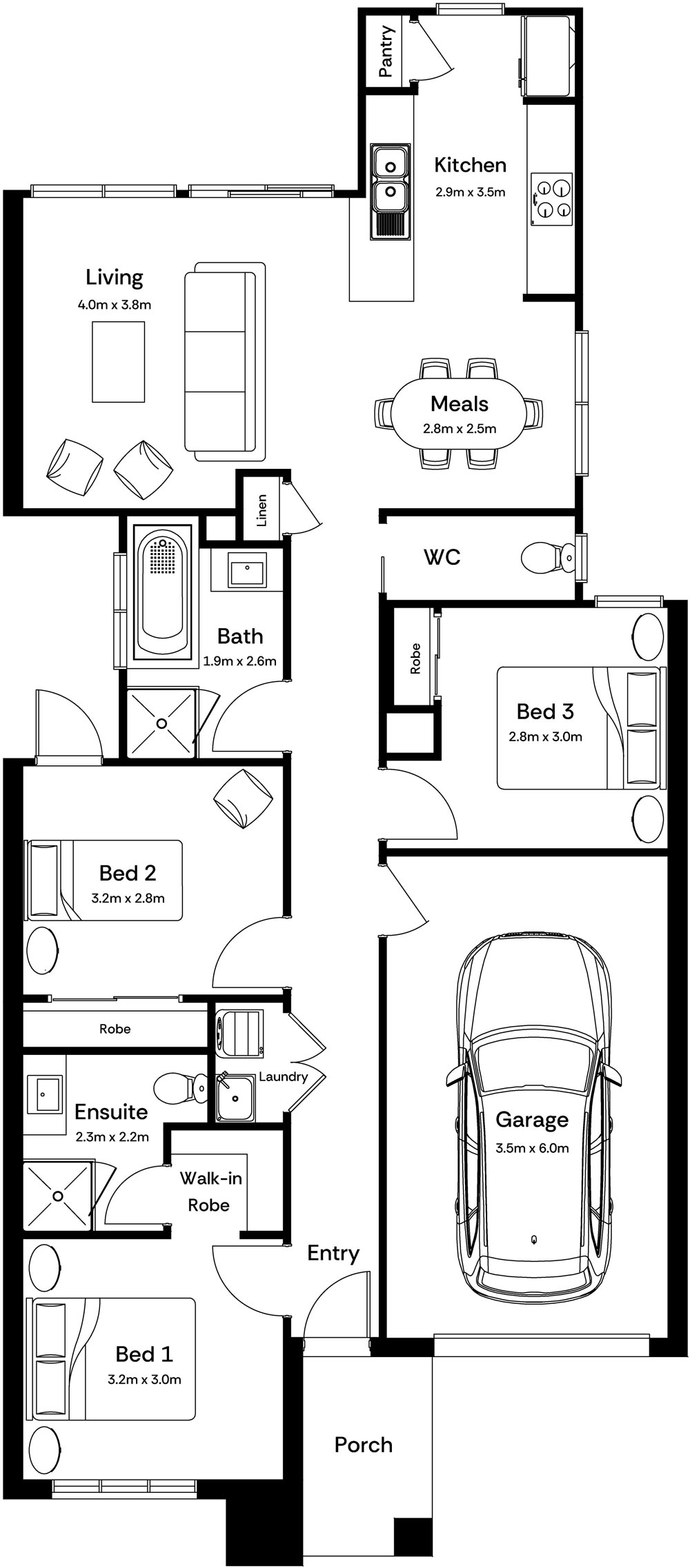
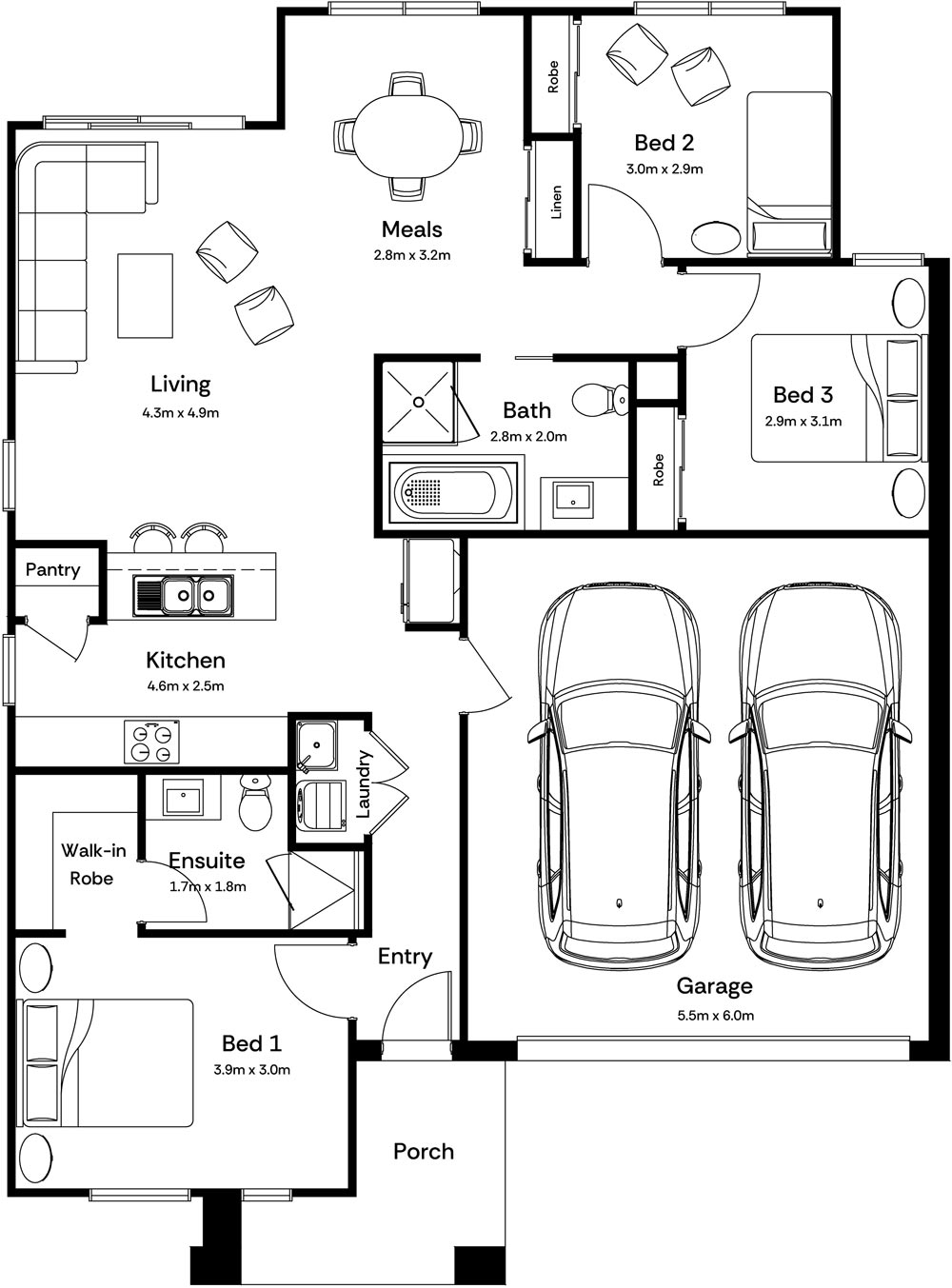
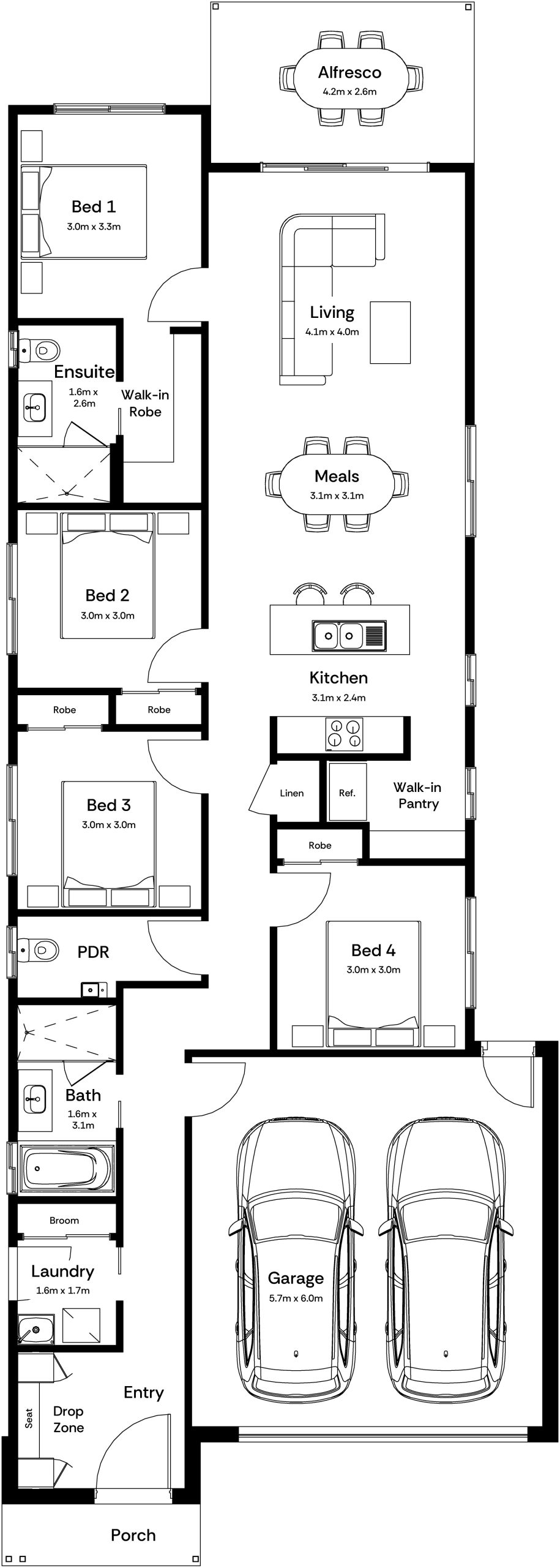
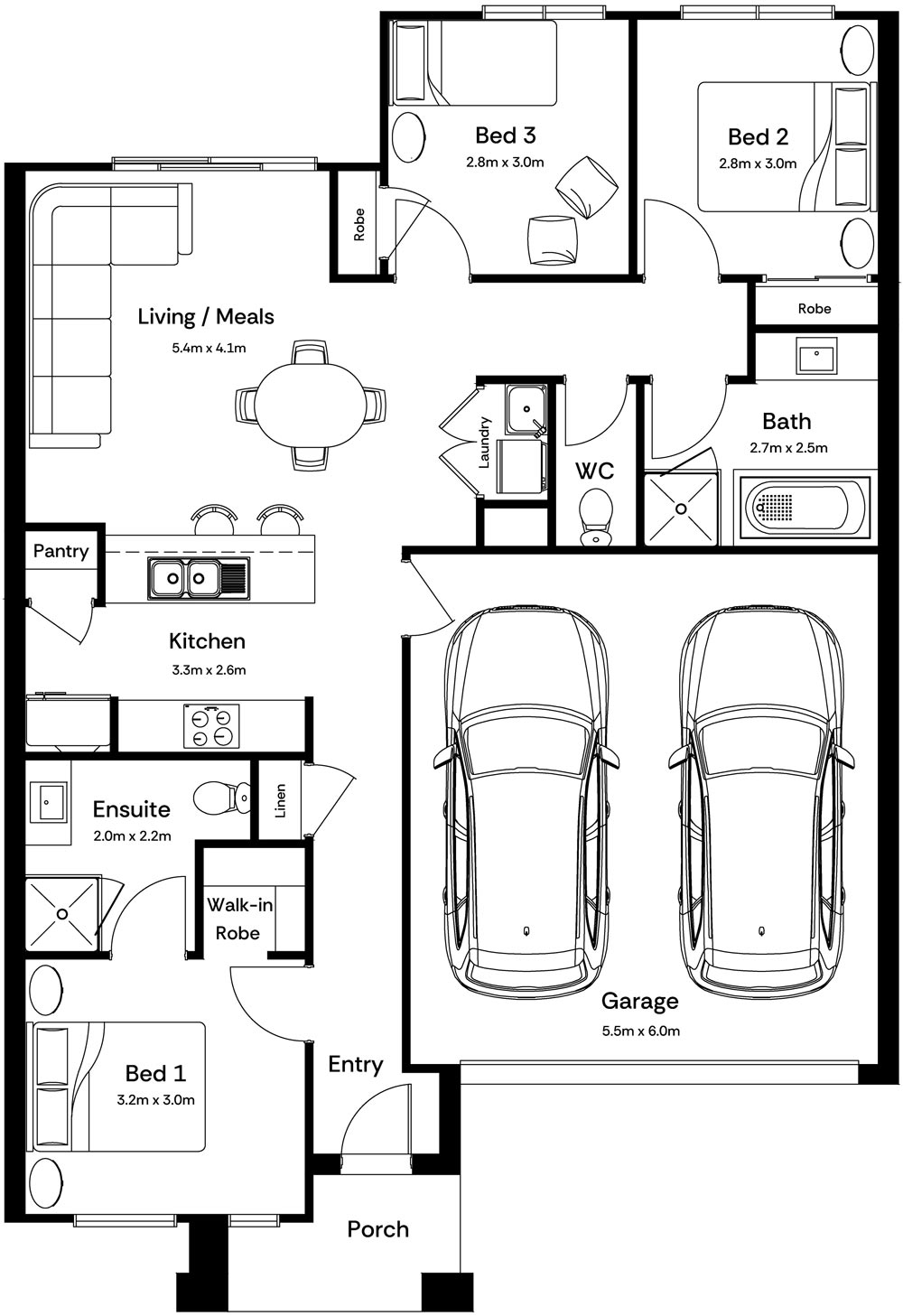
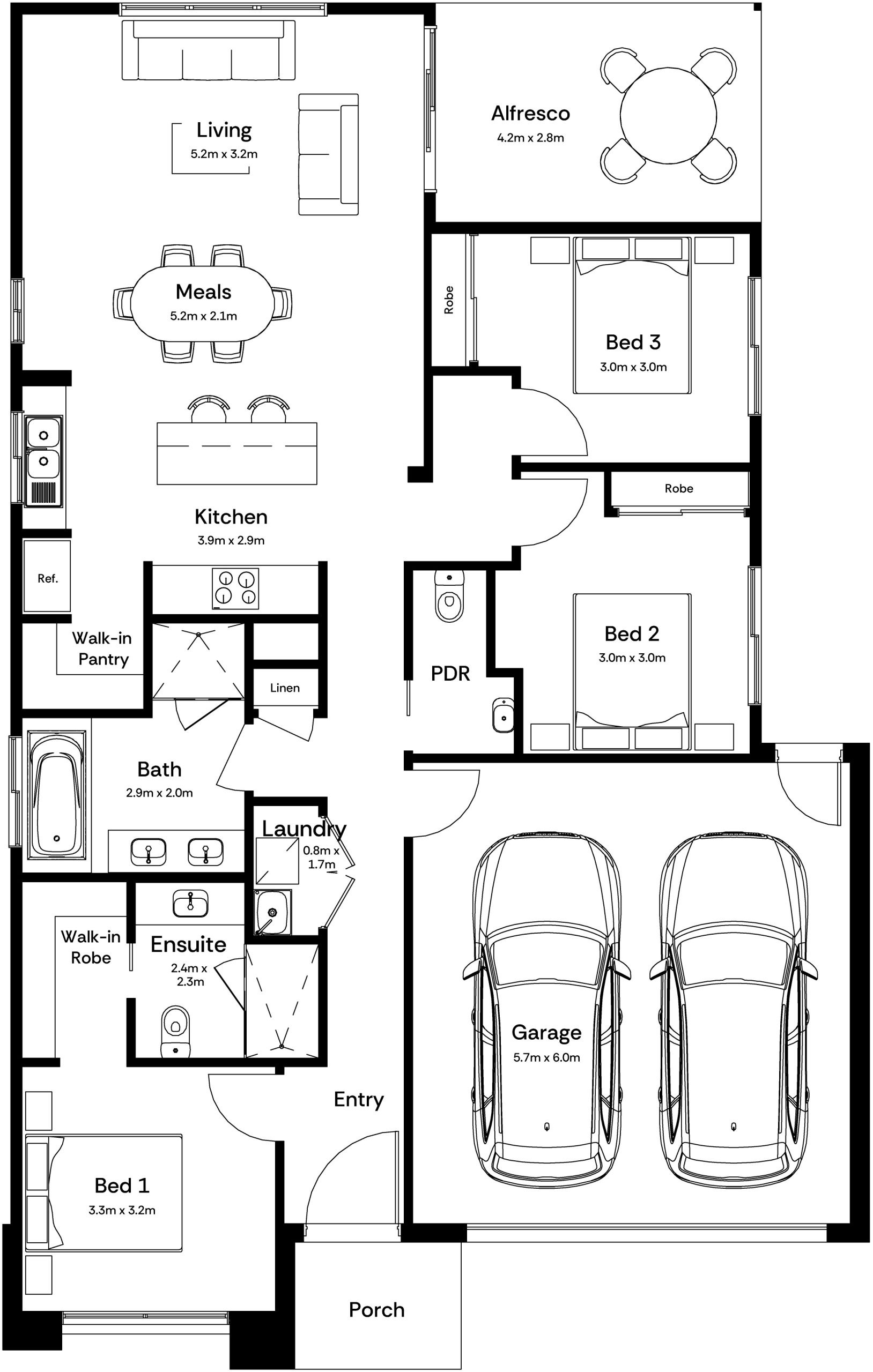
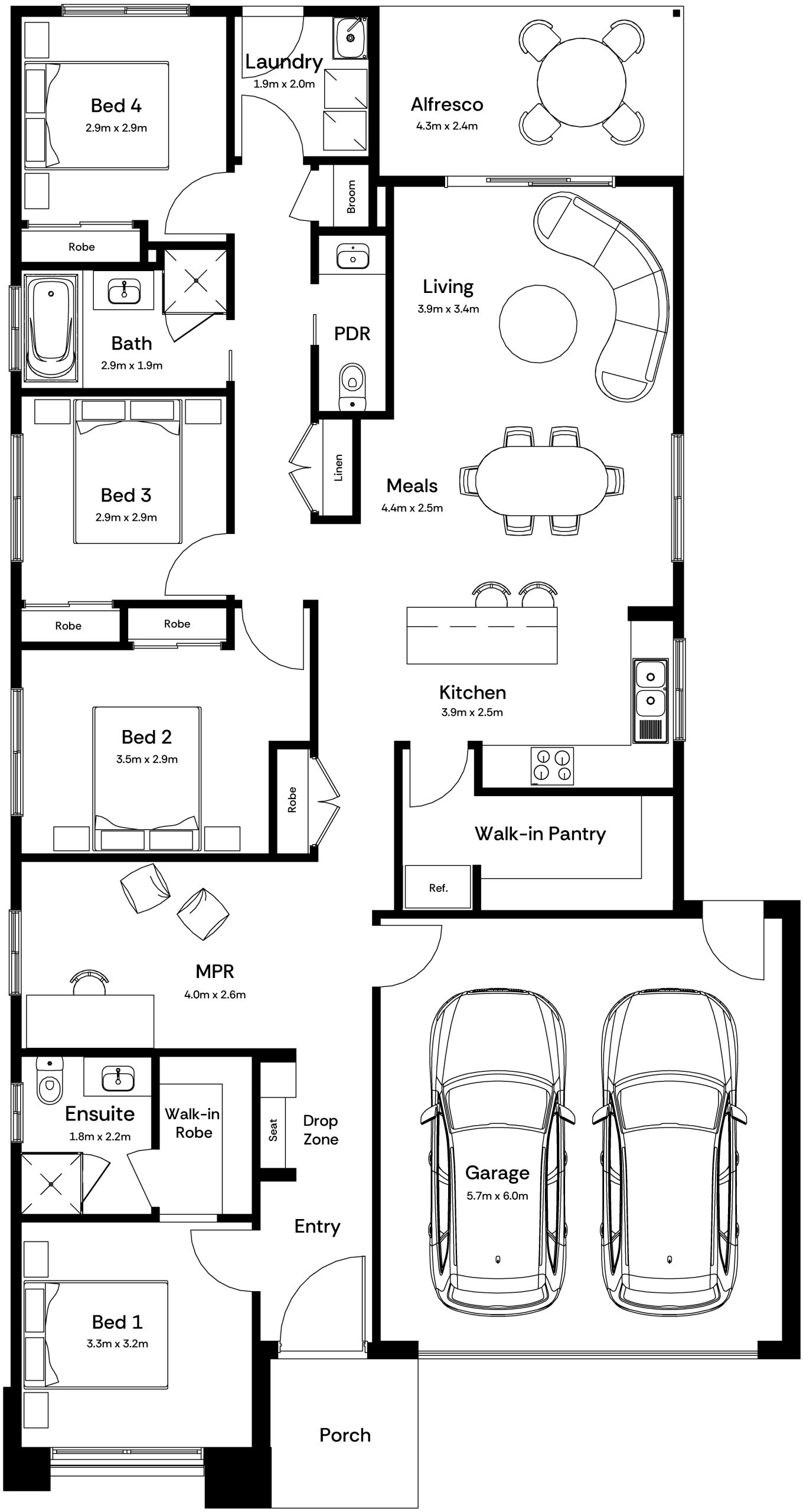
Within the current Mayde Homes range, there are three-bedroom designs across different block sizes. The Archer is the most compact example at 110.60m² and is designed for an 8.5m minimum lot width, while larger three-bedroom designs give you more internal space without necessarily adding another bedroom.
The important bit is that “three bedrooms” does not describe one type of home.
You can have a compact three-bedroom design or a considerably larger one. Look at what the rest of the floorplan gives you as well.
What do you get with a 4 bedroom home?
The obvious advantage of a four-bedroom home is an extra room.
The less obvious question is what that room is worth to you.
It could become:
If you already know how you would use the fourth bedroom, that makes the decision easier.
If your answer is “I suppose it would be good to have”, keep comparing.
An extra bedroom still occupies part of the floorplan, and you may prefer to use that space or budget somewhere else.
A fourth bedroom does not always mean you need a wider block
It is easy to assume that moving from three bedrooms to four automatically means moving to a much larger block.
Not necessarily.
The way the home is designed matters too.
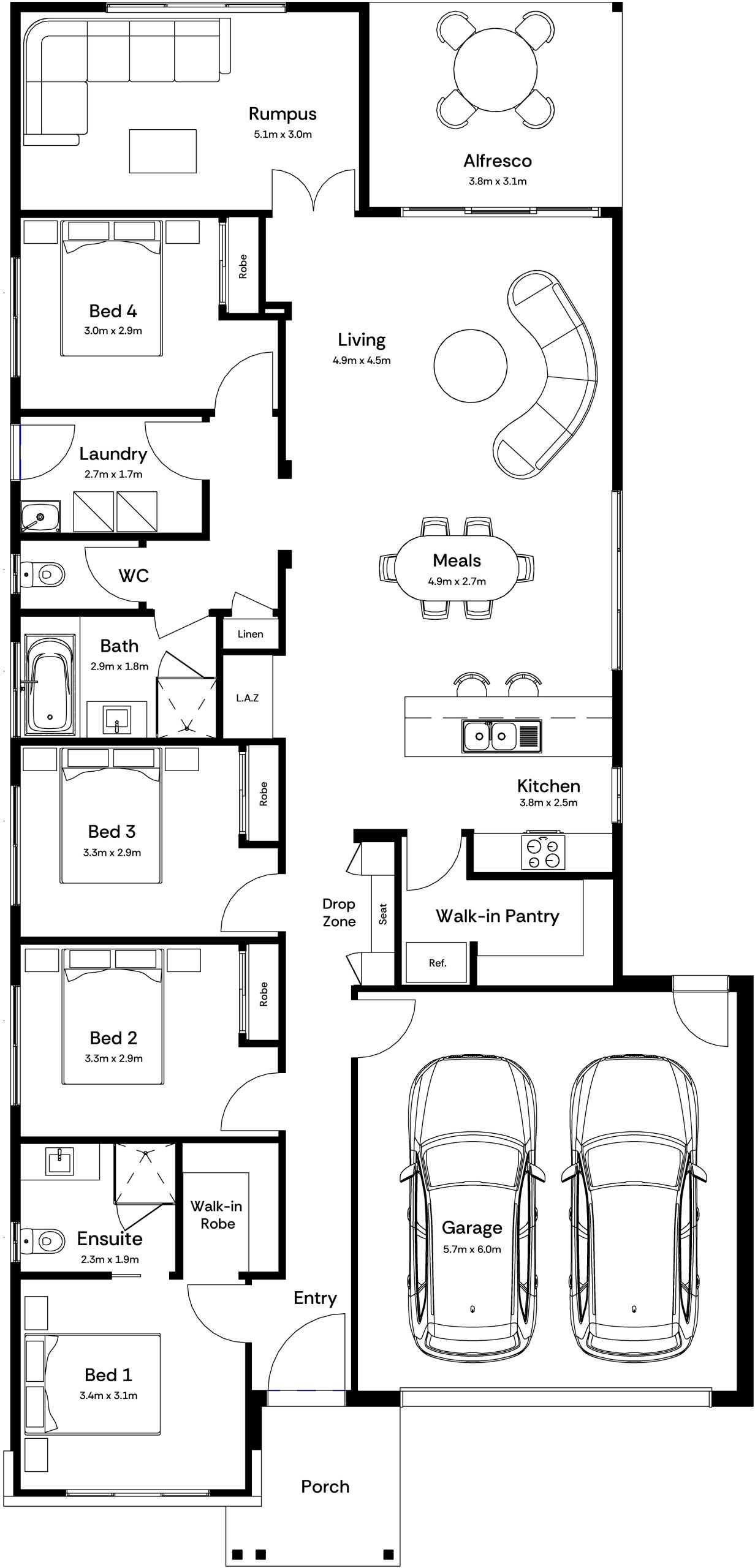
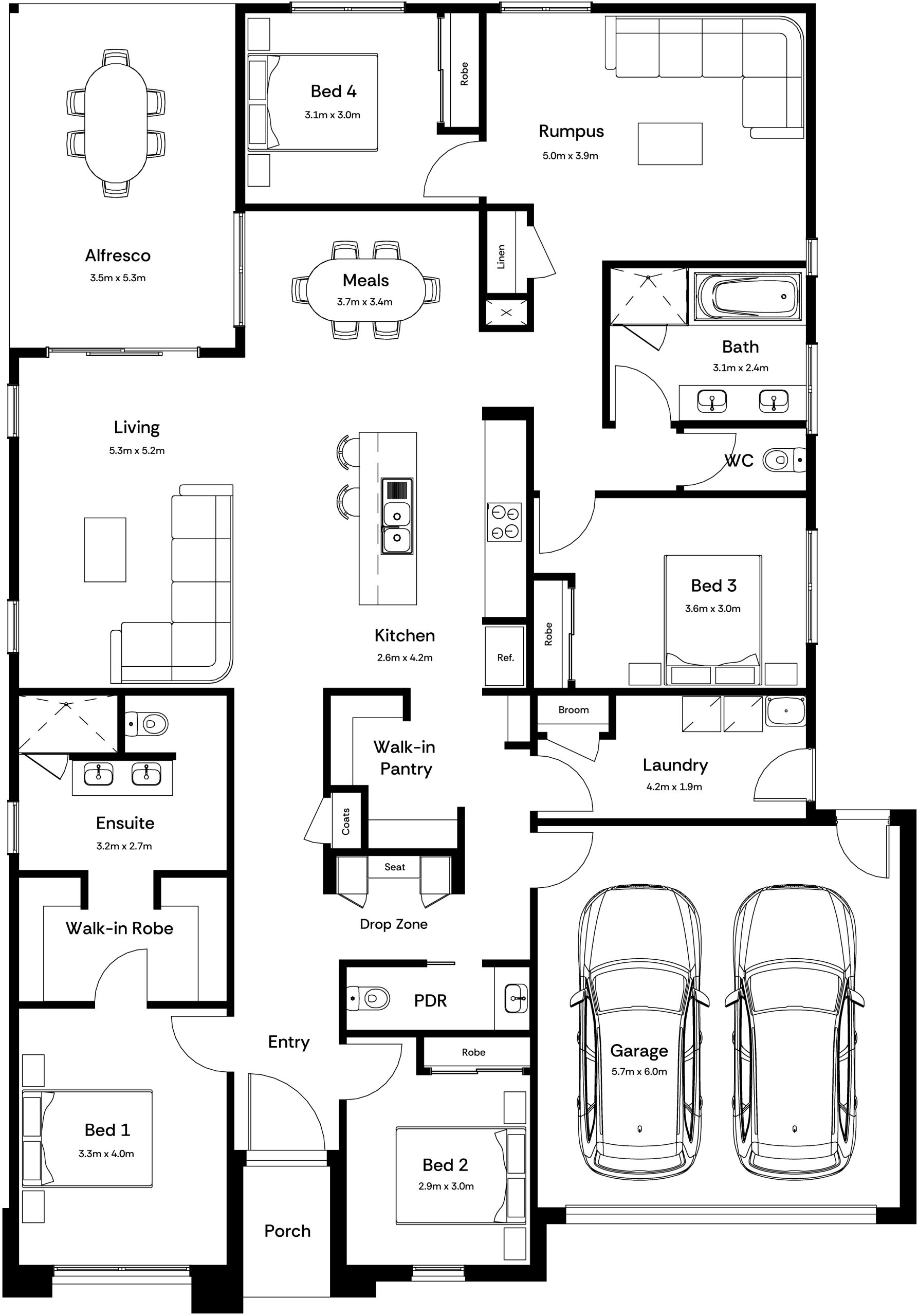
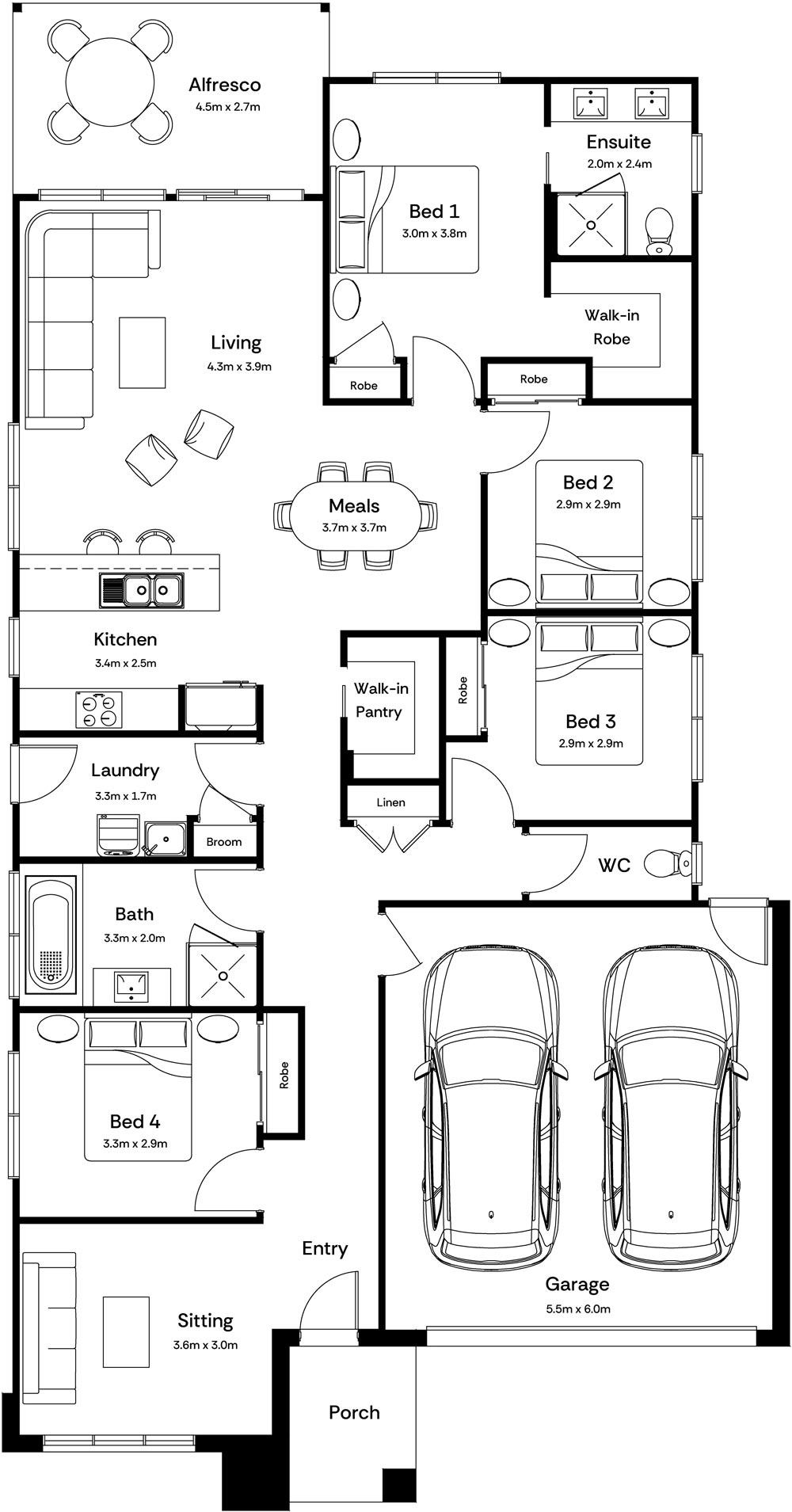
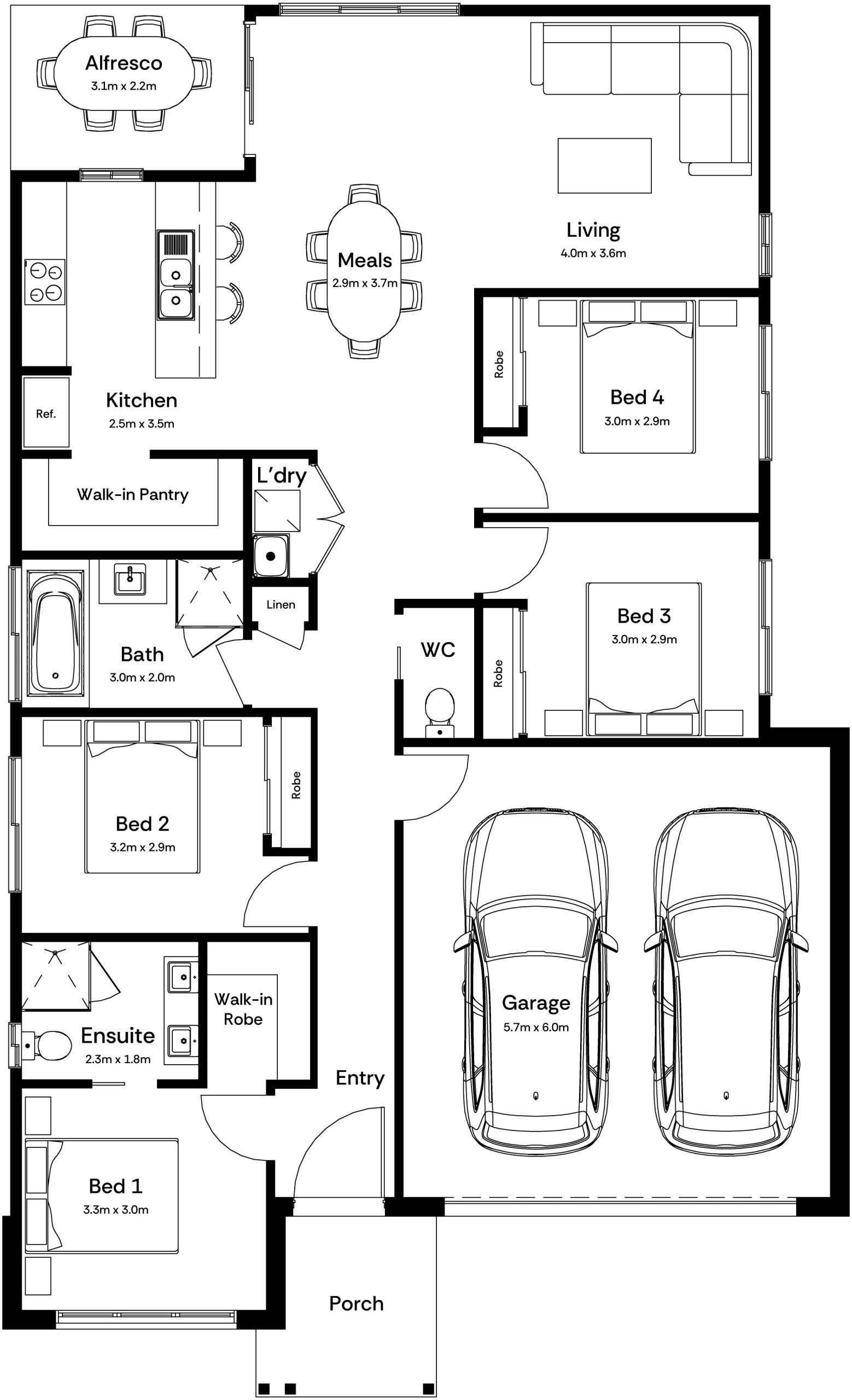
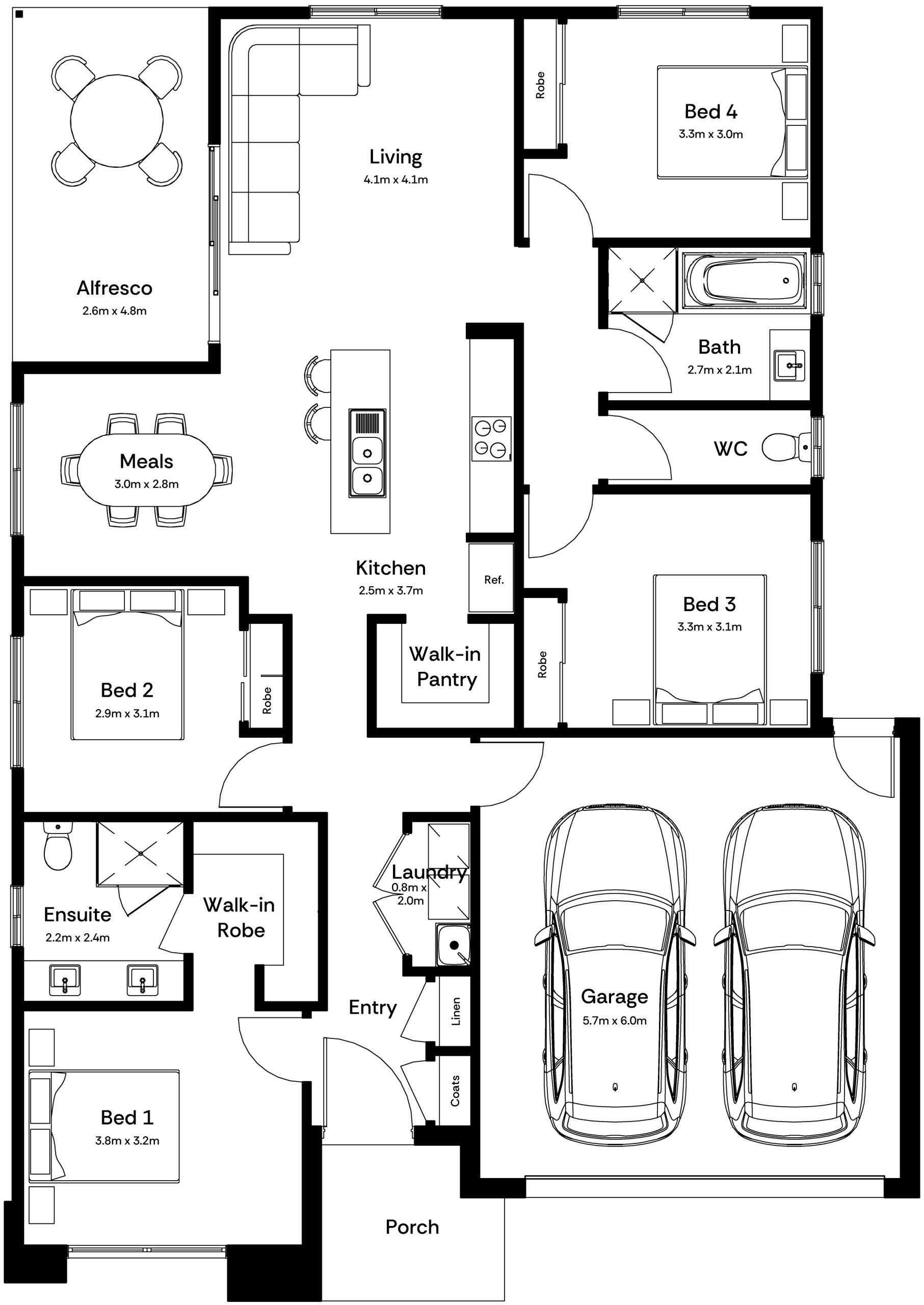
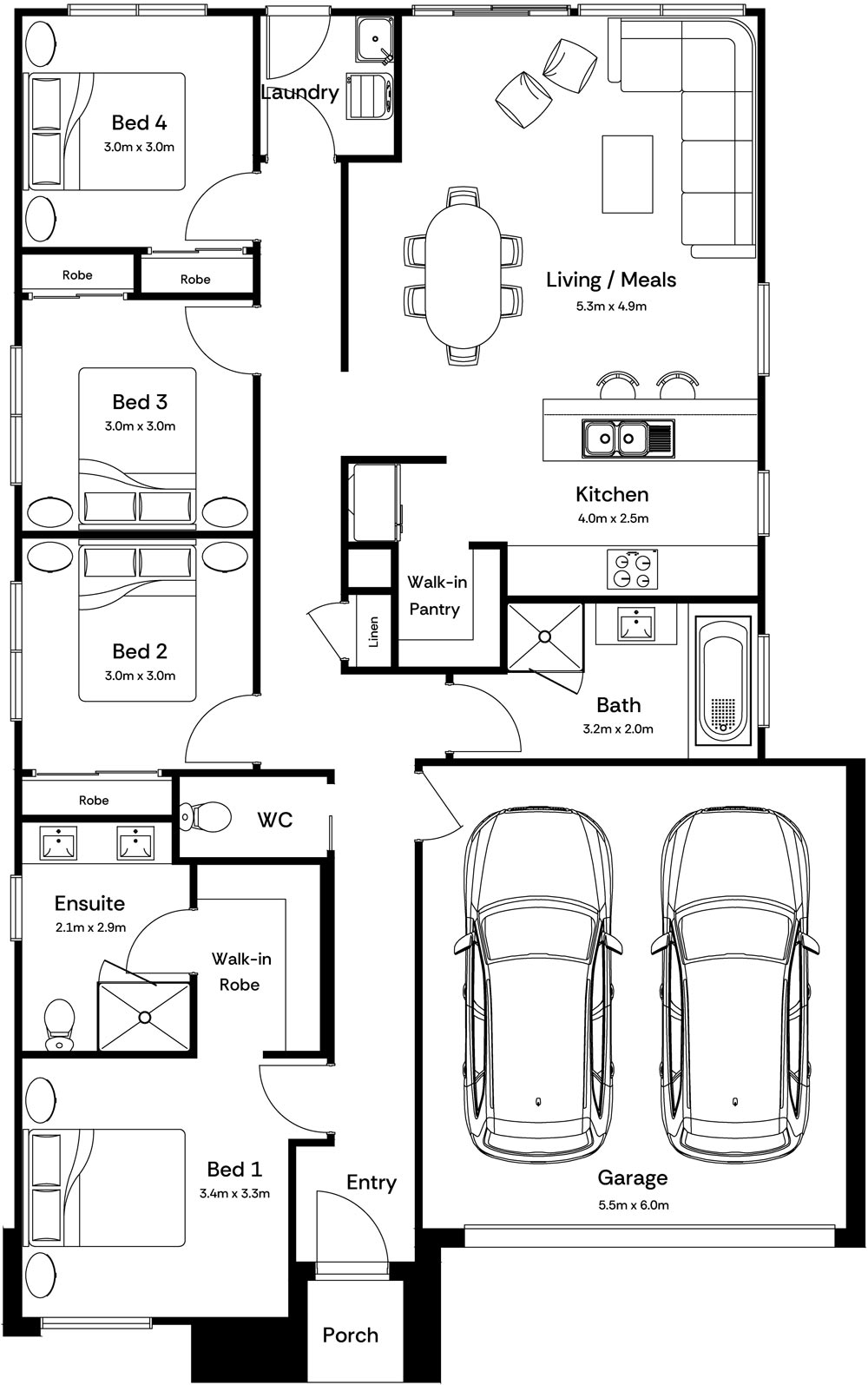
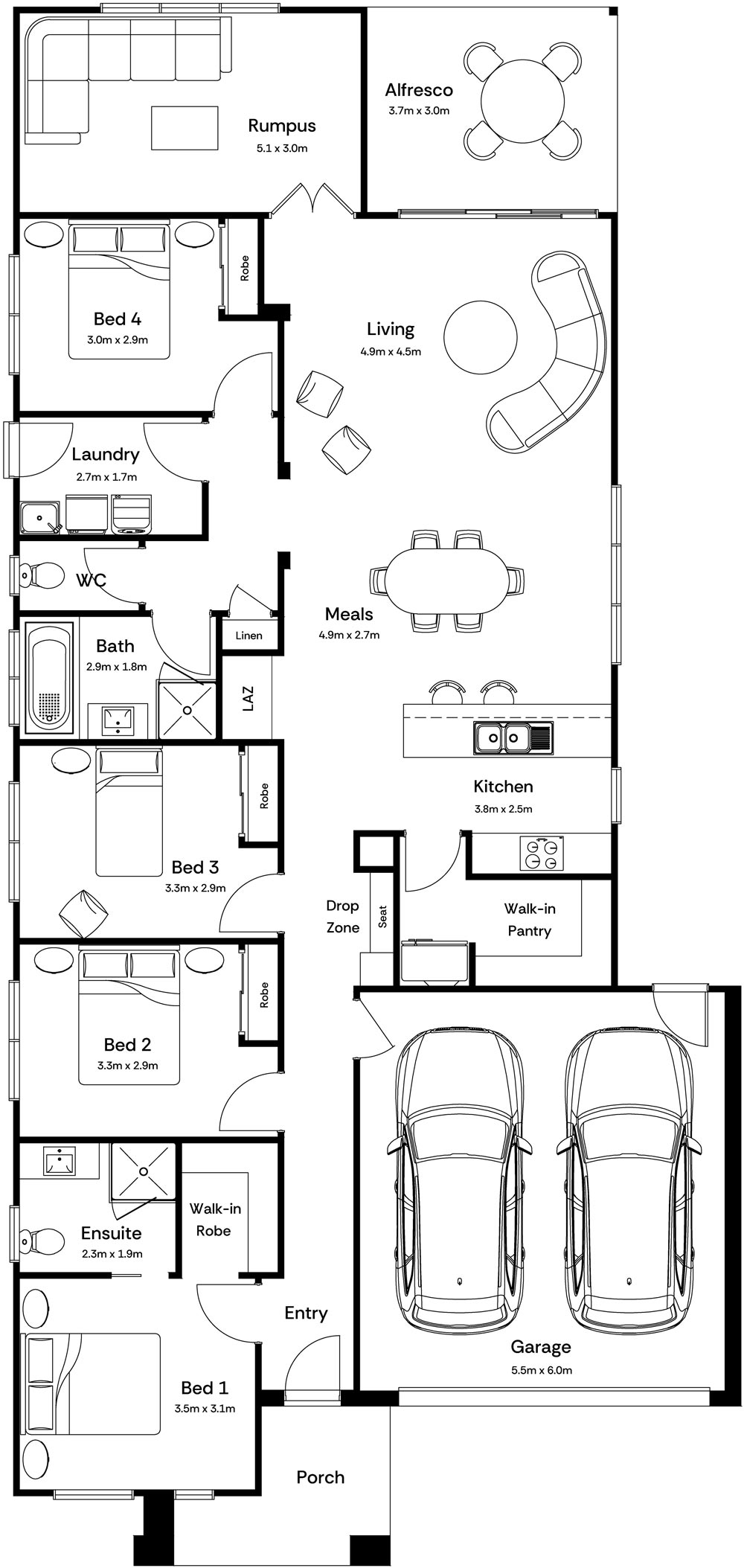
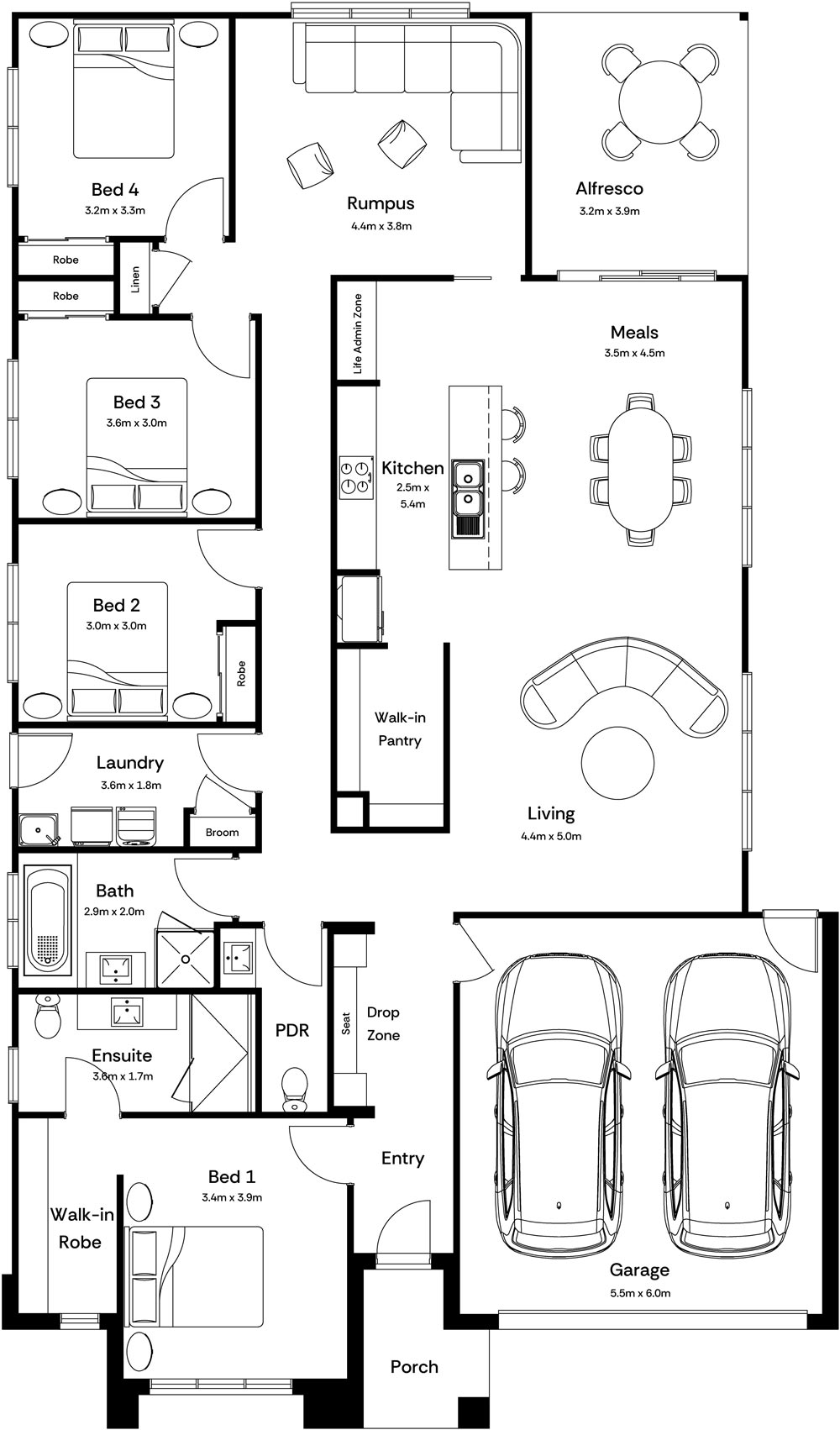
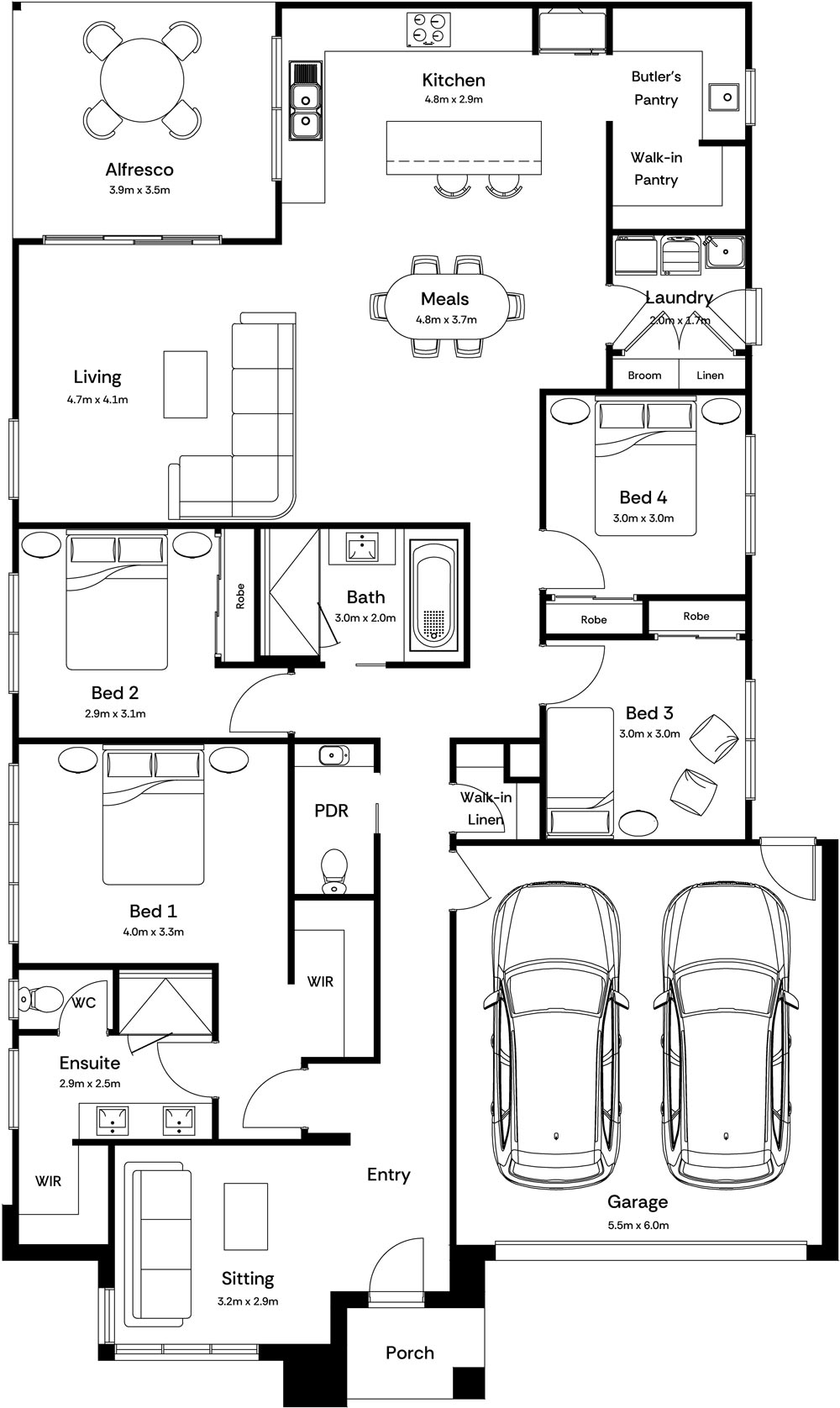
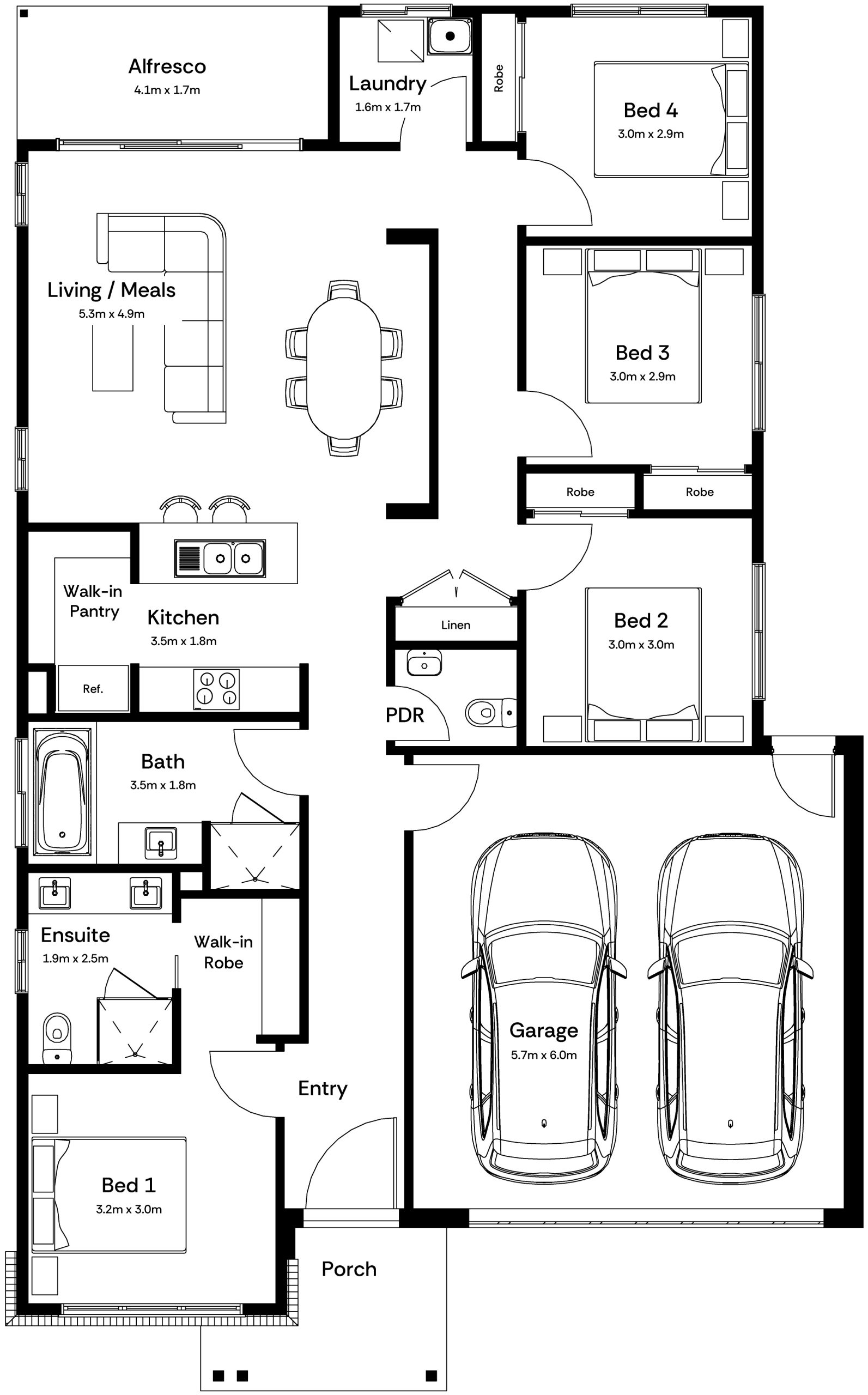
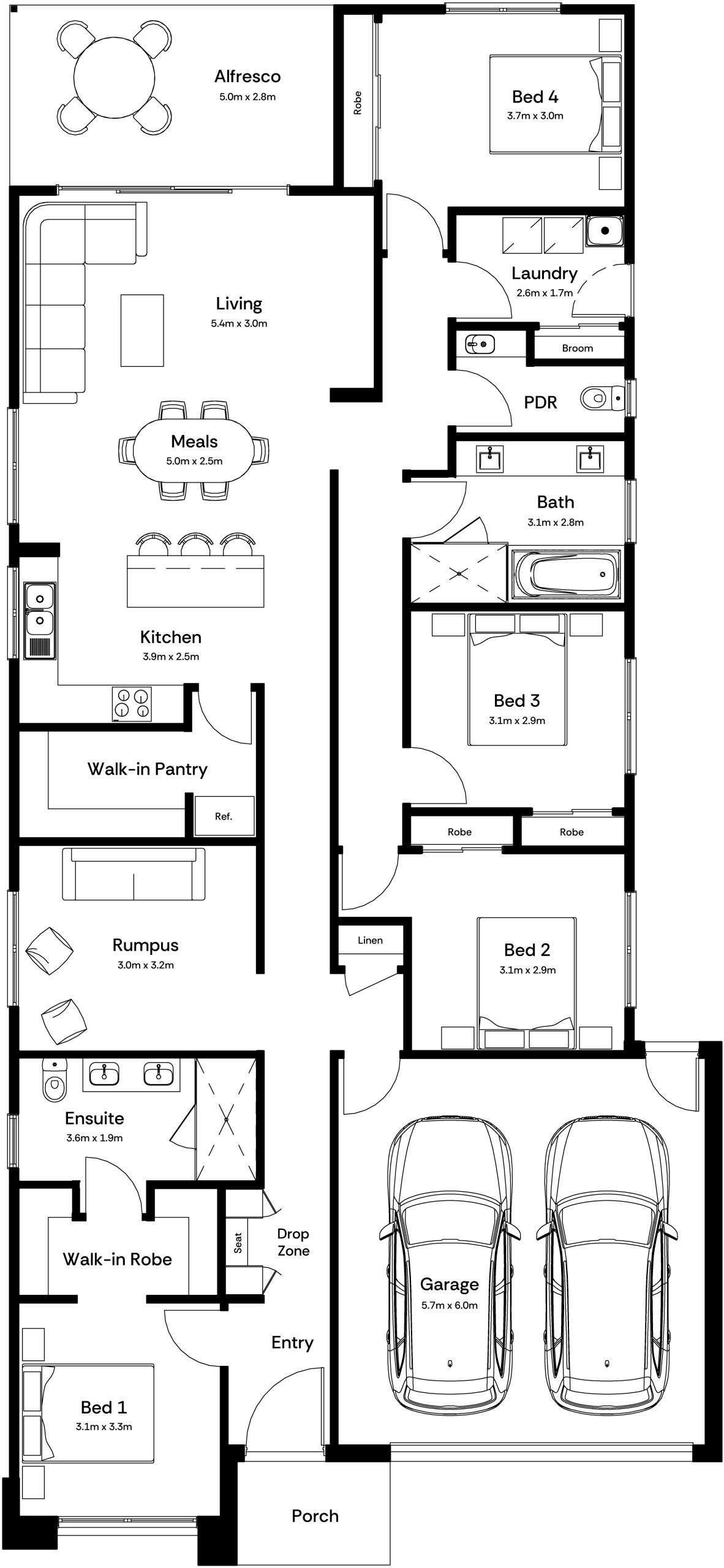
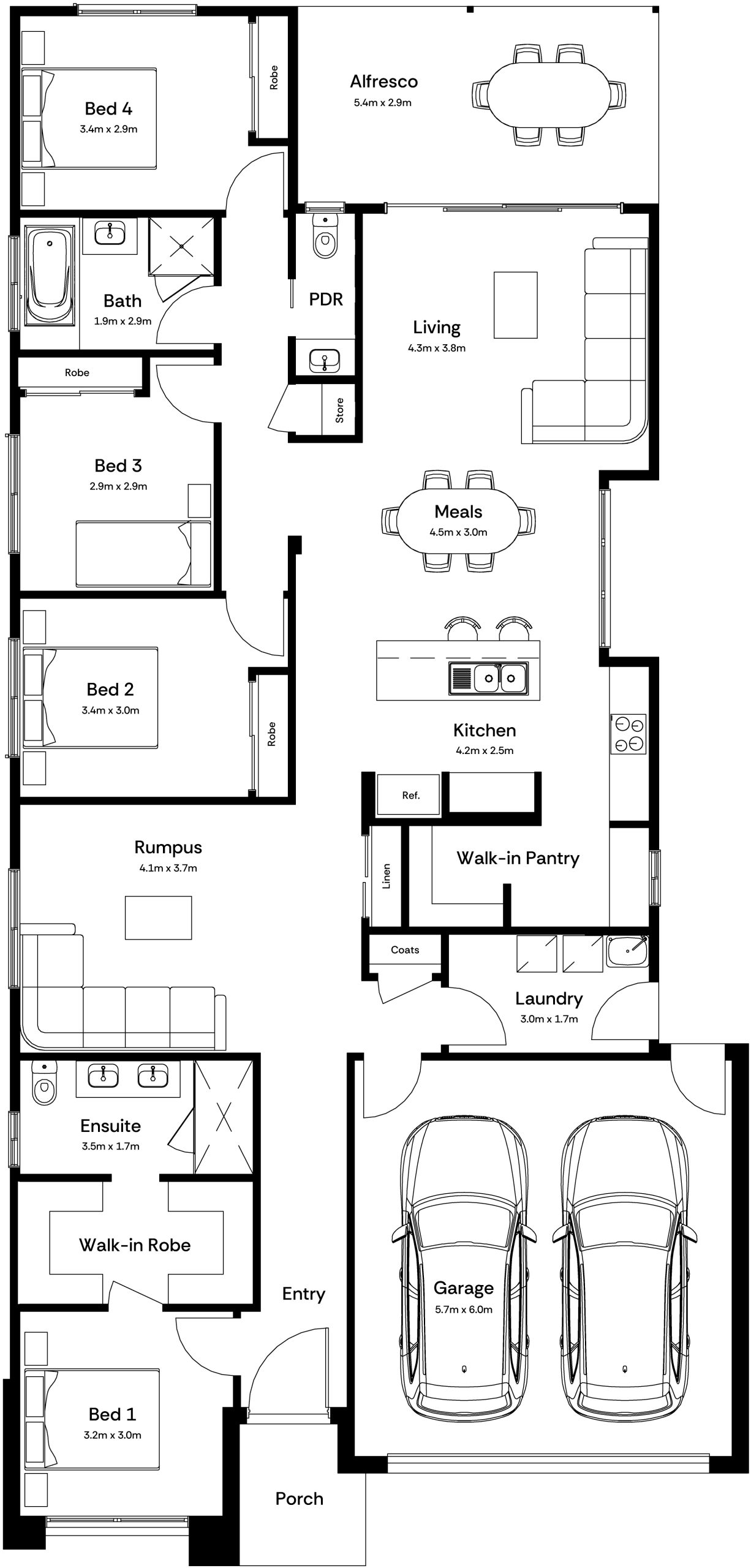
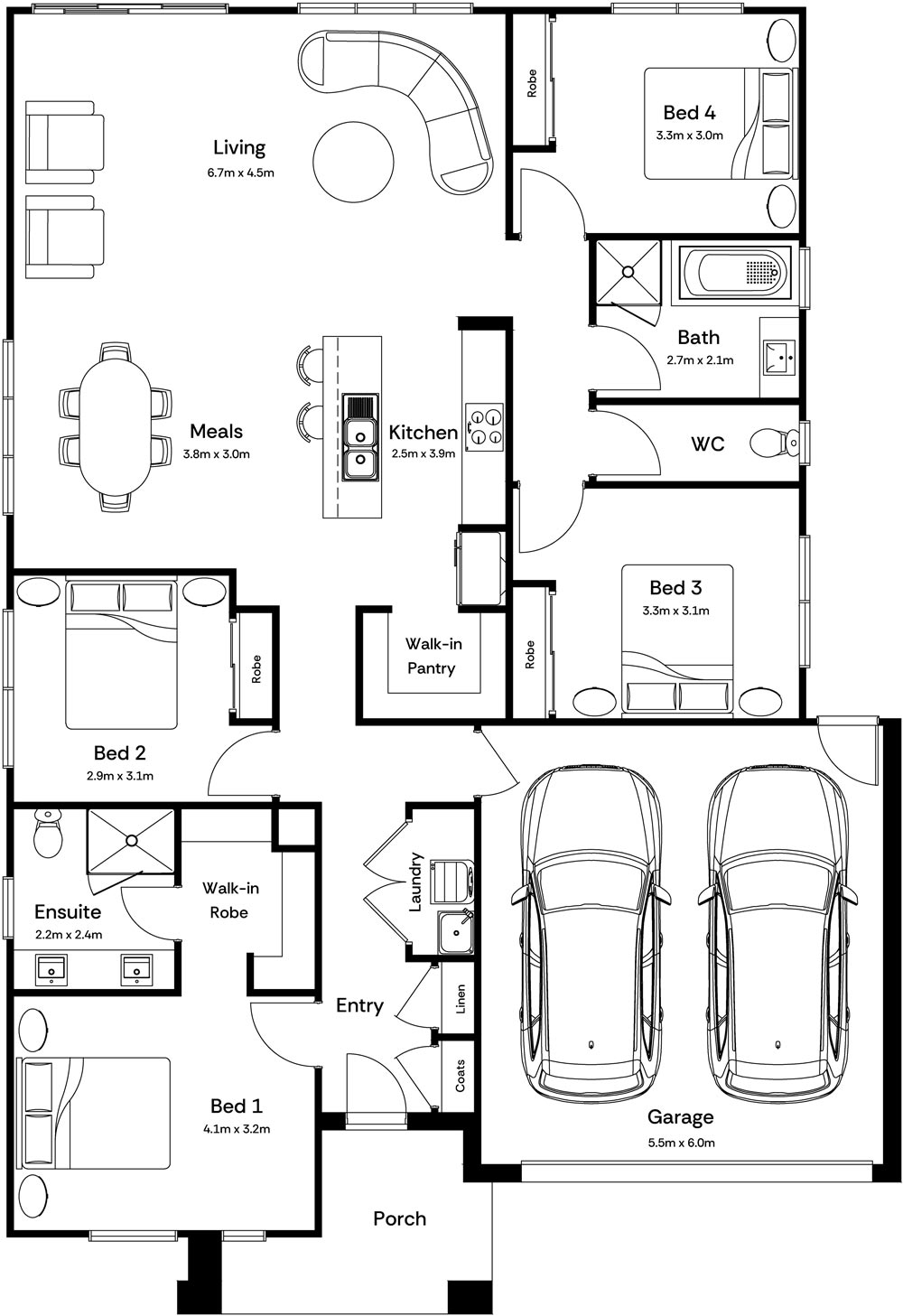
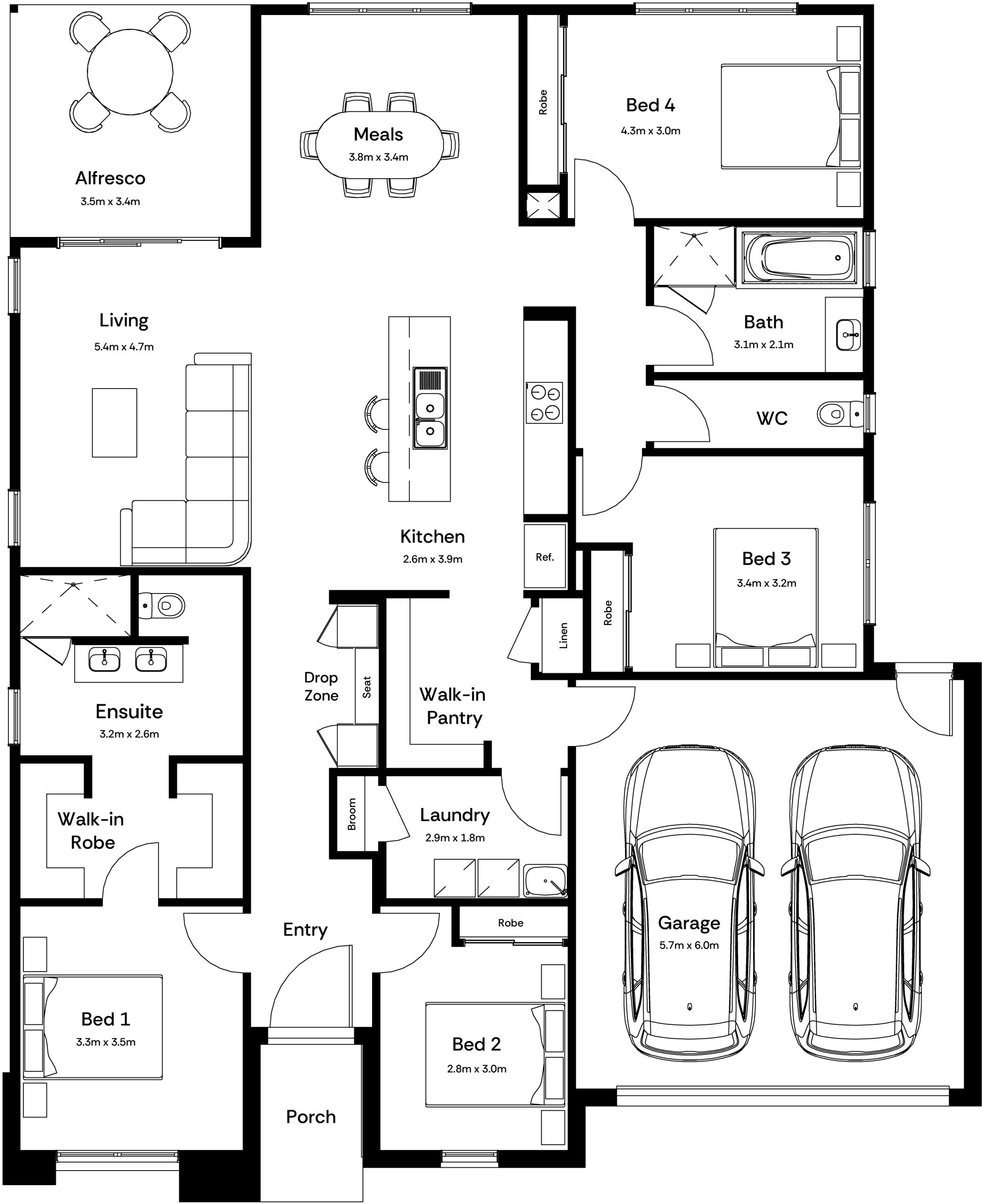
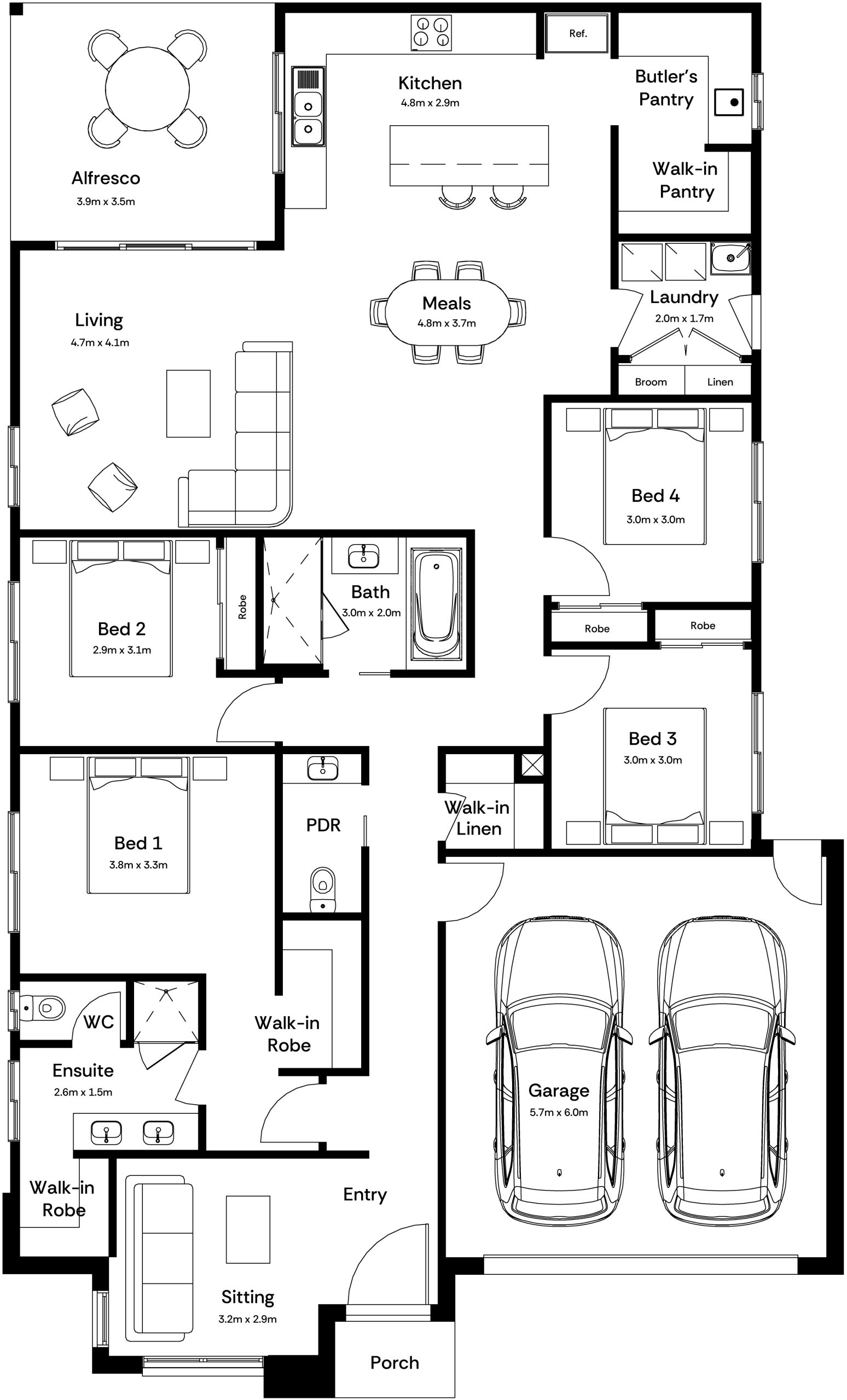
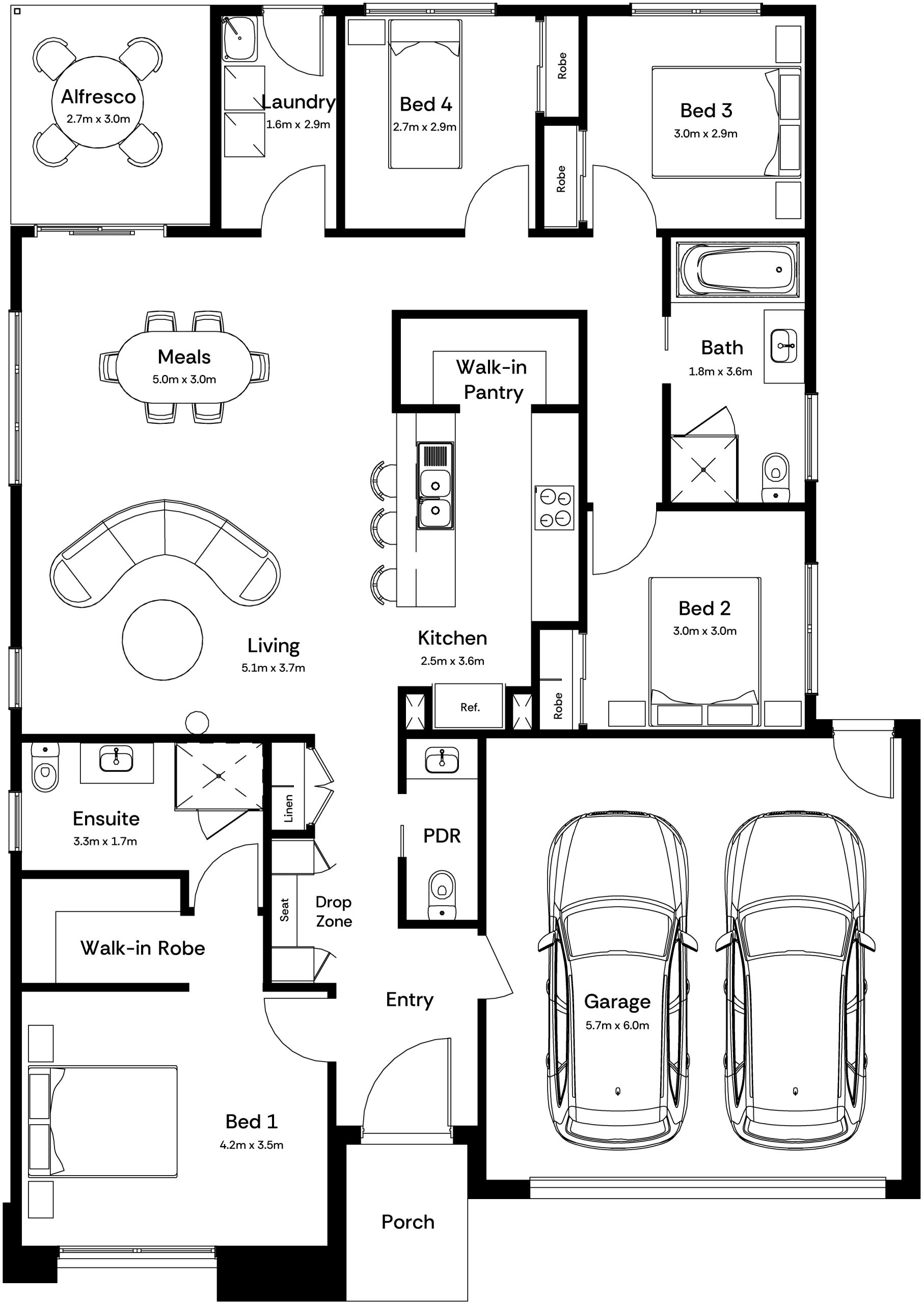
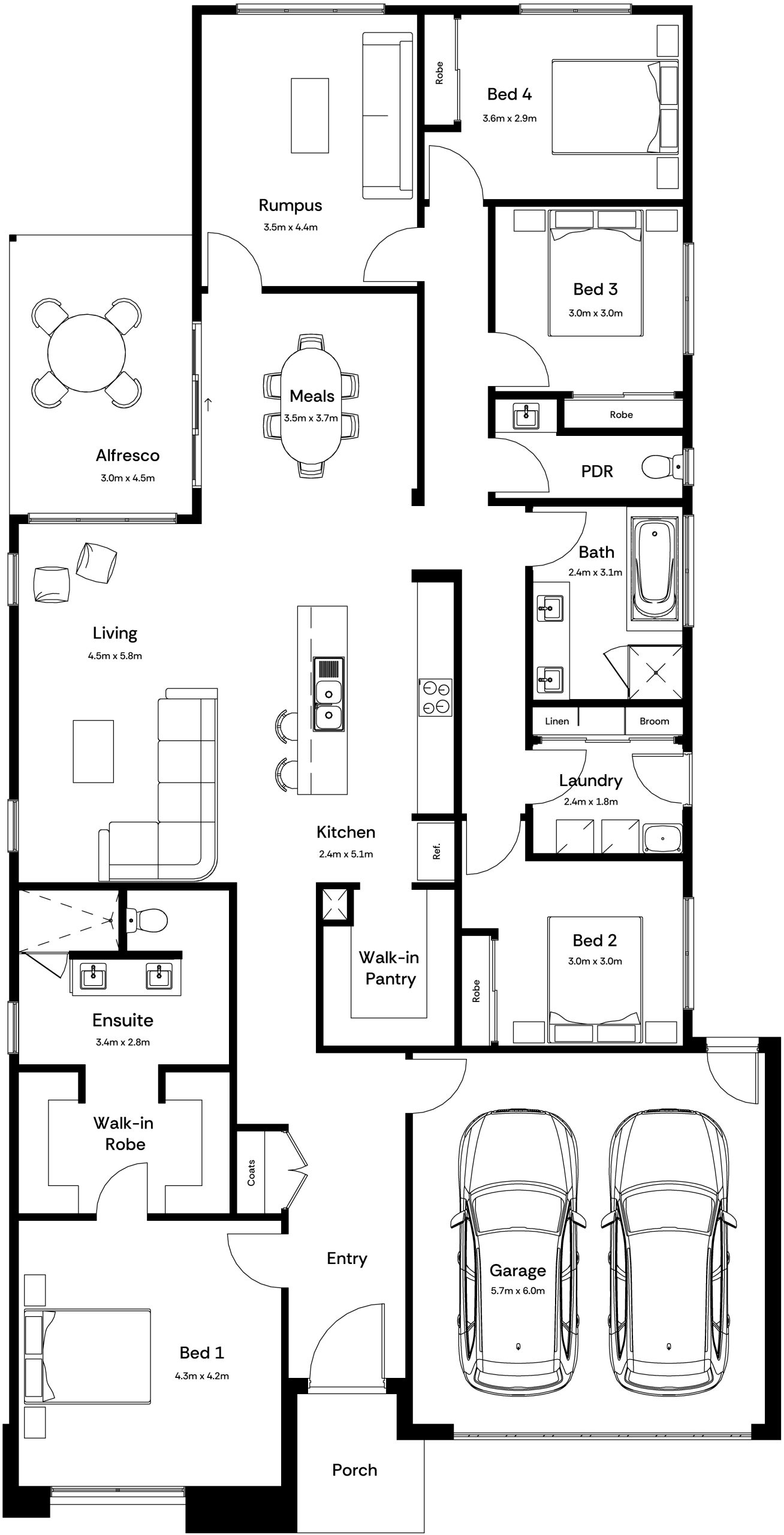
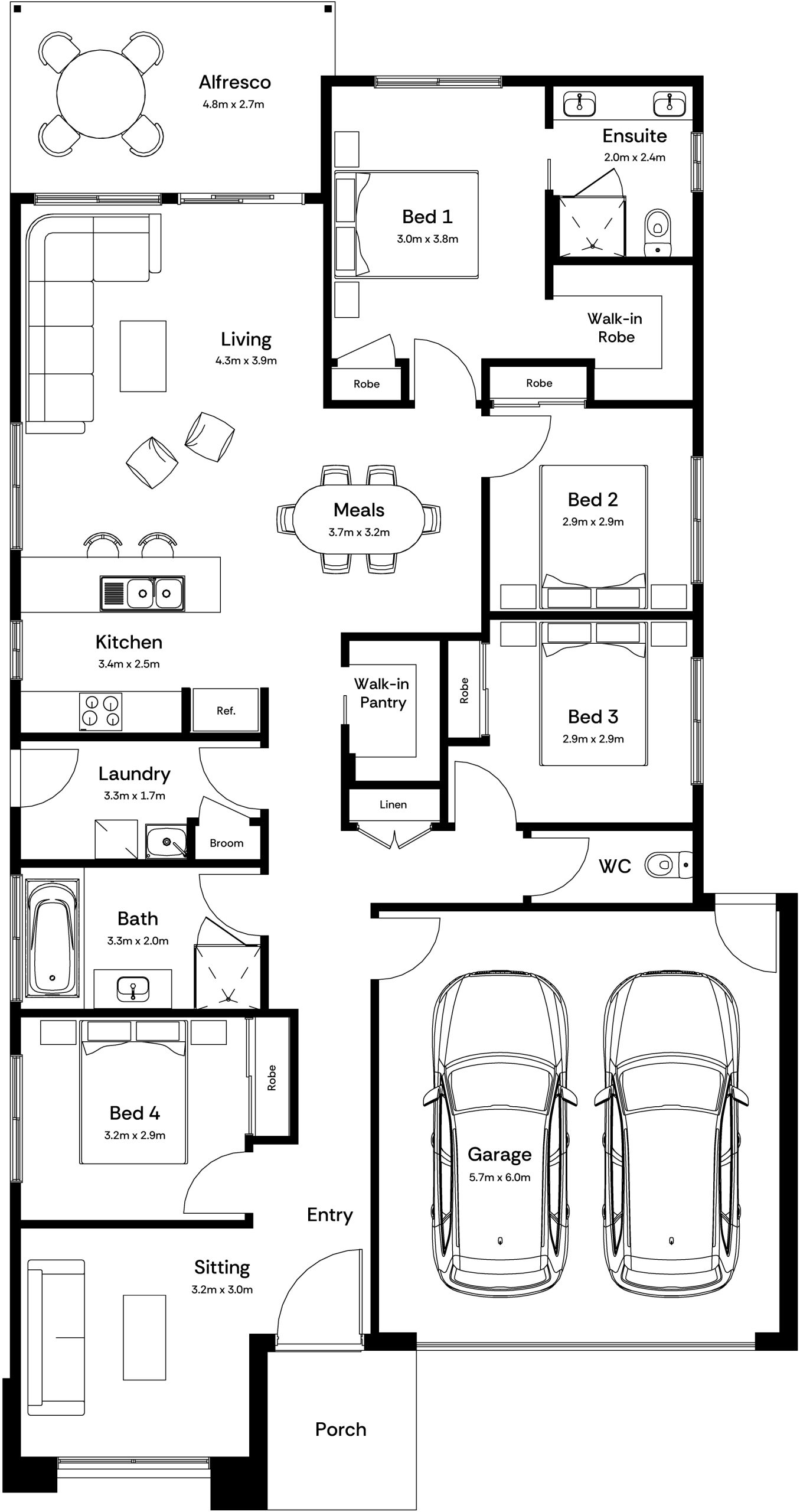
The Archer and Carter are a useful Mayde Homes example. Both are designed for an 8.5m minimum lot width. Archer provides three bedrooms in a more compact 110.60m² home, while Carter uses a longer footprint to provide four bedrooms across 143.73m².
That is a much more useful comparison than simply asking whether three or four bedrooms is better.
If you want the fourth bedroom, you may still be able to build on a narrow block. You just need to consider what happens to the overall home size, lot depth and budget.
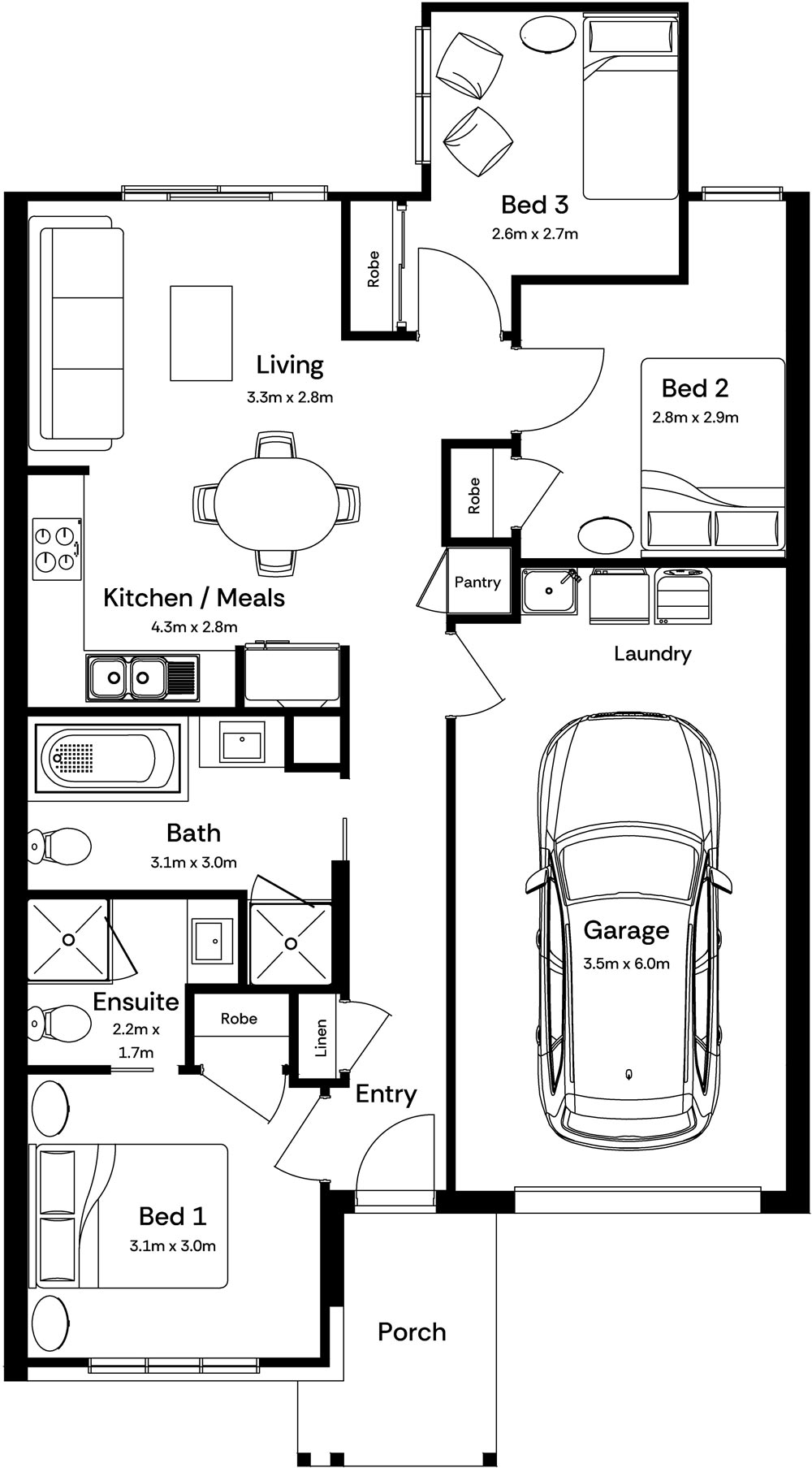
Archer – 3 bedrooms
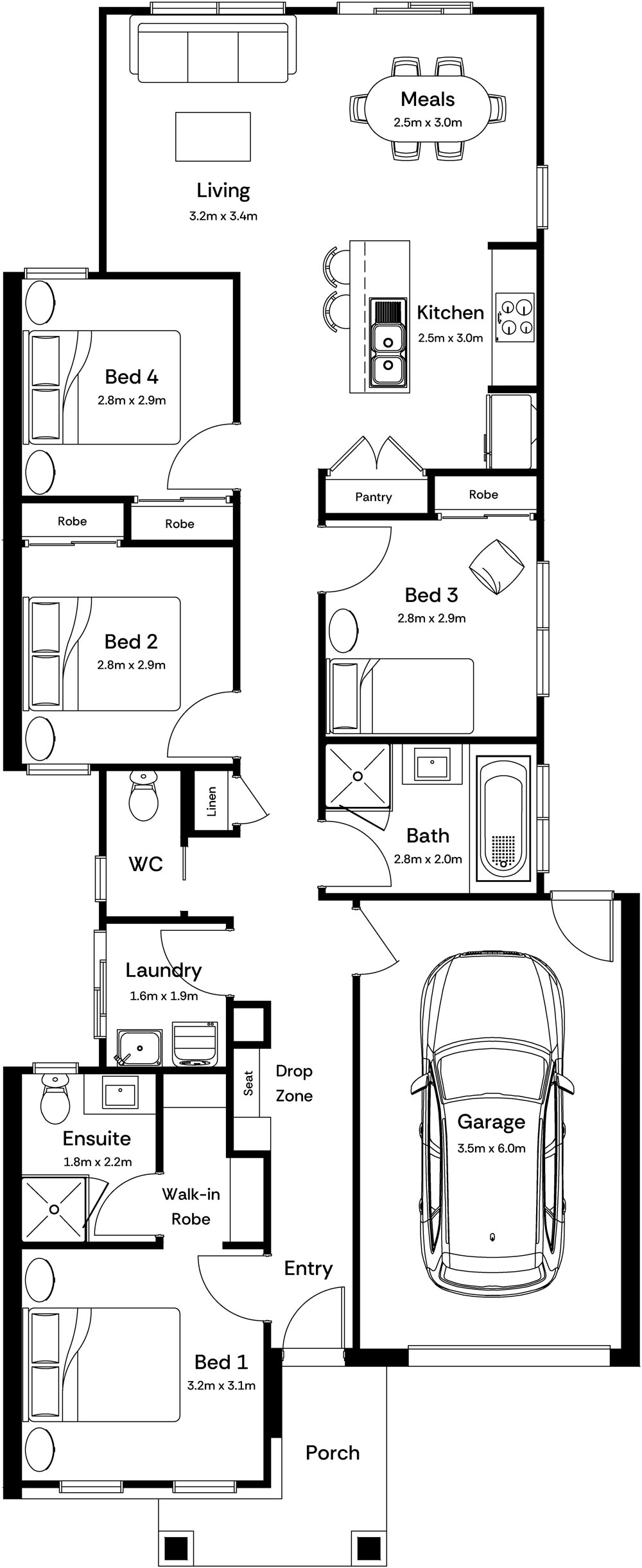
Carter – 4 bedrooms
Think about what you give up for the extra bedroom
When comparing two floorplans, look at where the extra bedroom has come from.
Has the overall house become larger?
Or has the same amount of space been divided differently?
Depending on the designs you are comparing, adding another bedroom could affect:
Sometimes the four-bedroom design is simply a larger home and gives you more of everything.
Other times, you are choosing between an extra bedroom and more generous spaces elsewhere.
Put the floorplans beside each other and work out what is actually changing.
Would you rather have an extra bedroom or a second living area?
This is one of the more useful questions to ask.
If you have three bedrooms and only need two of them permanently, your third bedroom can already double as an office or guest room.
You might get more everyday value from using additional floor area for a second living space instead of adding bedroom number four.
Or you may feel exactly the opposite.
A second lounge you never use is not inherently more useful than a fourth bedroom you never use.
Think about how your household spends its time rather than what sounds impressive on a list of features.
Think about working from home
Working from home has made the bedroom question slightly less straightforward.
You may only need two bedrooms for sleeping but still want a third or fourth room because you need a proper workspace.
A spare bedroom can work well as an office, particularly if you only work from home occasionally.
If somebody works from home most days, look at the room itself rather than assuming any spare bedroom will do.
Consider:
Sometimes a floorplan with a dedicated study or flexible living space will suit you better than adding an entire bedroom purely to hold a desk.
What about future children?
This is often where first home buyers start talking themselves into another bedroom.
It is sensible to think ahead if starting or growing a family is genuinely part of your plans.
But try to distinguish between something reasonably likely and designing your first home around every possible version of your future.
If you expect to need three children’s bedrooms while you are living in the home, four bedrooms makes obvious sense.
If children are a possibility years away and you are not sure how long you will stay in the home, you might decide differently.
Your first home can accommodate the future without needing to predict all of it.
What if you want guests to stay?
Think about how often people genuinely stay with you.
If family regularly visits from interstate, a dedicated guest bedroom might be valuable.
If somebody stays twice a year, keeping an entire room permanently empty for them may rank slightly lower than having a bigger living area, more storage or more backyard every other day of the year.
A flexible room can also do both.
An office with enough room for a bed or sofa bed might give you the guest space you need without dedicating a full bedroom to occasional visitors.
Consider the block you want
The number of bedrooms cannot be separated completely from the land.
A larger home may require:
If you are choosing land and your home at the same time, compare what the three and four-bedroom options mean for the whole property.
Would you rather have four bedrooms and a smaller backyard?
Or three bedrooms and more outdoor space?
There is no correct answer.
There is just the answer that sounds considerably more like the way you want to live.
Consider your budget
More bedrooms do not automatically tell you how much a home will cost.
Overall home size, design, block, inclusions and the choices you make throughout the build all matter.
Still, if your four-bedroom option means choosing a larger home or a larger block, it is worth asking whether the extra room is where you want to put more of your budget.
Compare the complete options rather than deciding that four bedrooms is better and working backwards from there.
You may prefer the extra bedroom.
You may prefer a three-bedroom home and use the difference elsewhere.
Do not choose four bedrooms just for resale
Future buyers are worth keeping somewhere in the back of your mind.
They probably should not be sitting in the driver’s seat while you design your first home.
It is difficult to know exactly what a future buyer will value, what the property market will look like or when you will eventually sell.
Choose a home that makes sense for you first.
Practical layouts, usable rooms, storage and a home that suits its block are all worth thinking about without trying to predict what an imaginary buyer might want years from now.
Look at the size of the bedrooms too
Four bedrooms sounds great until three of them barely fit the furniture you want.
When comparing floorplans, look at the dimensions of every bedroom.
Think about whether each room can comfortably fit:
A three-bedroom home with more generous rooms might suit you better than a four-bedroom design where the additional room has squeezed everything else.
Or the four-bedroom floorplan may use the available space brilliantly.
This is why the floorplan matters more than the bedroom count on its own.
Flexibility can give you the best of both
Some home designs allow a bedroom to be used differently.
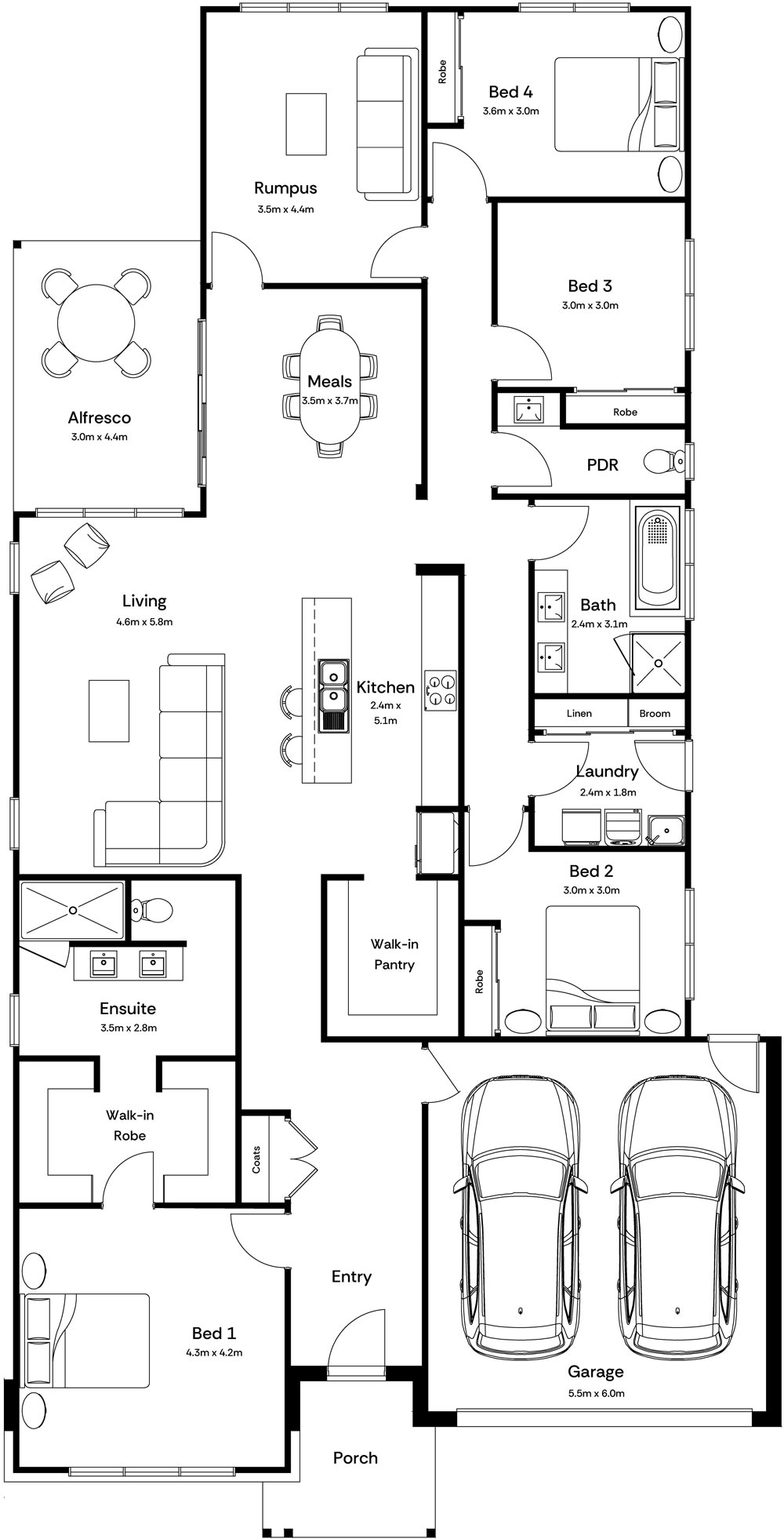
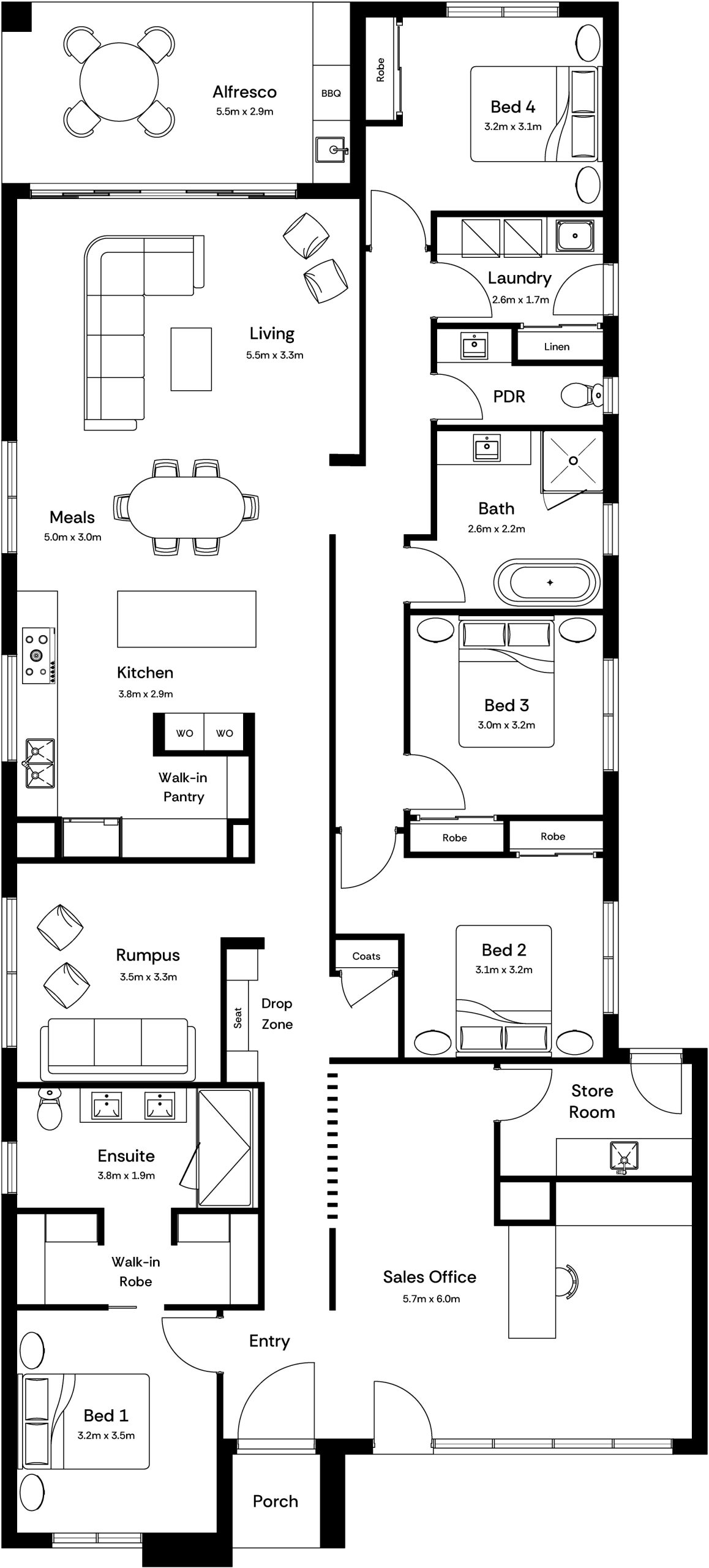
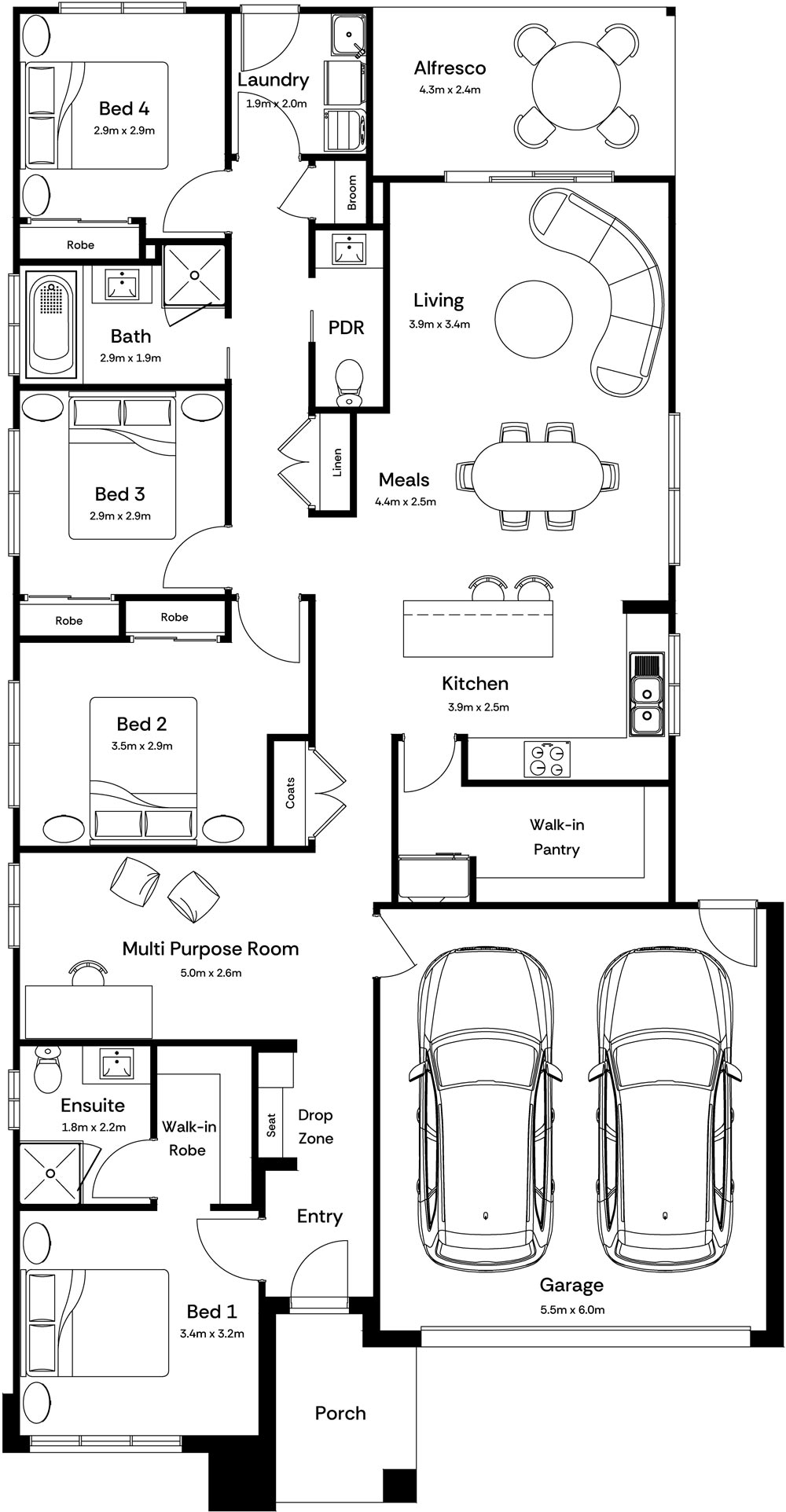
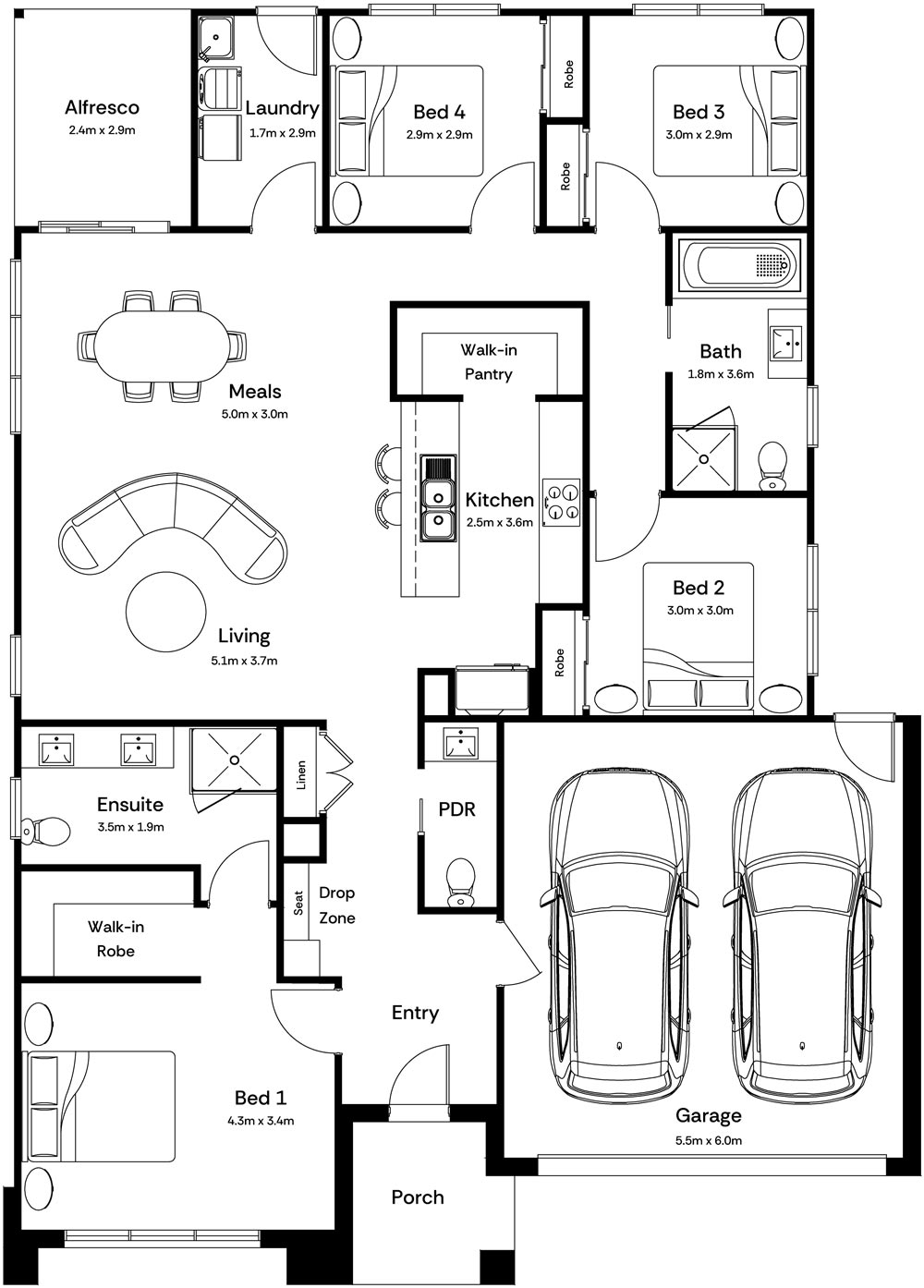
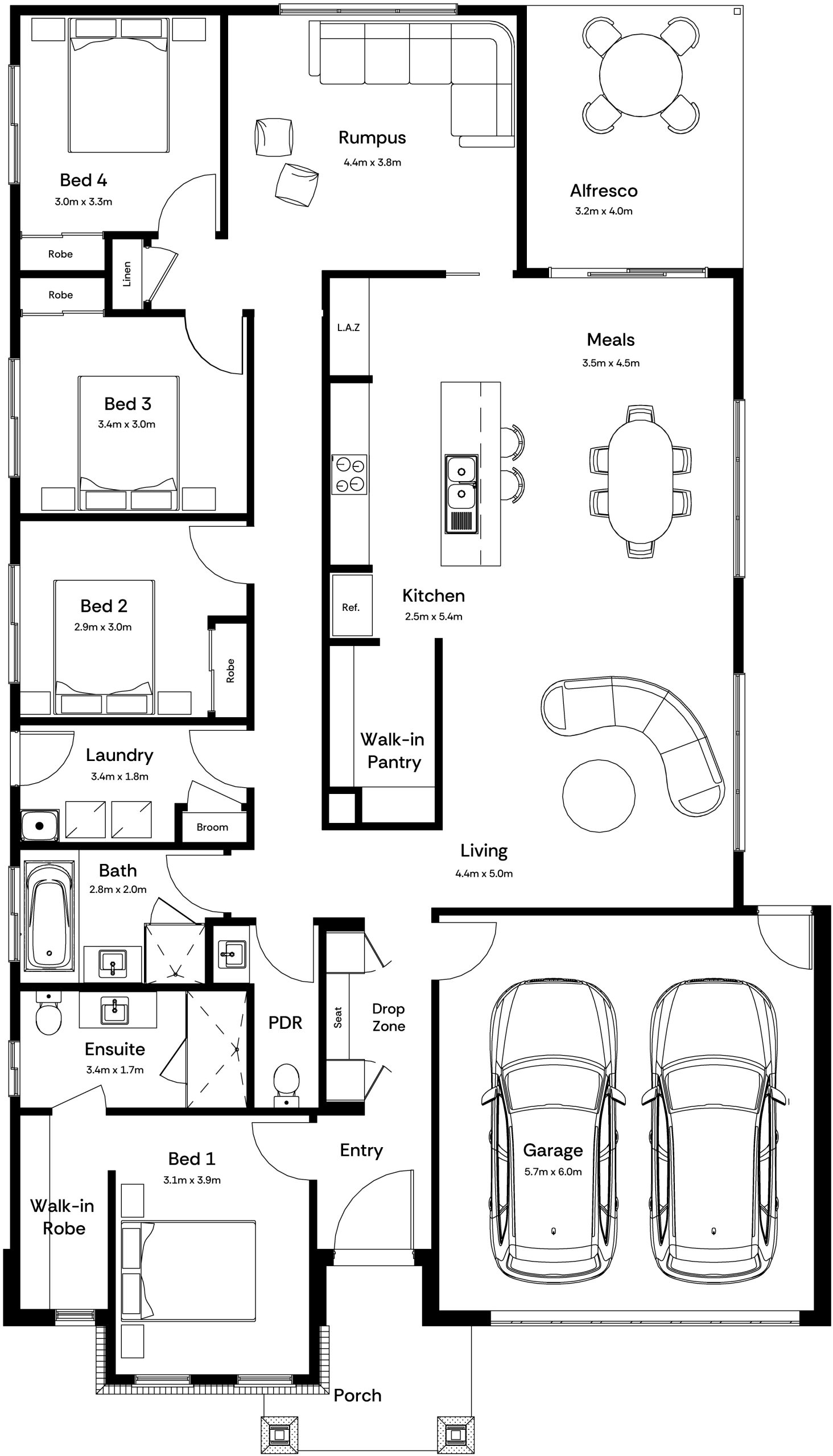
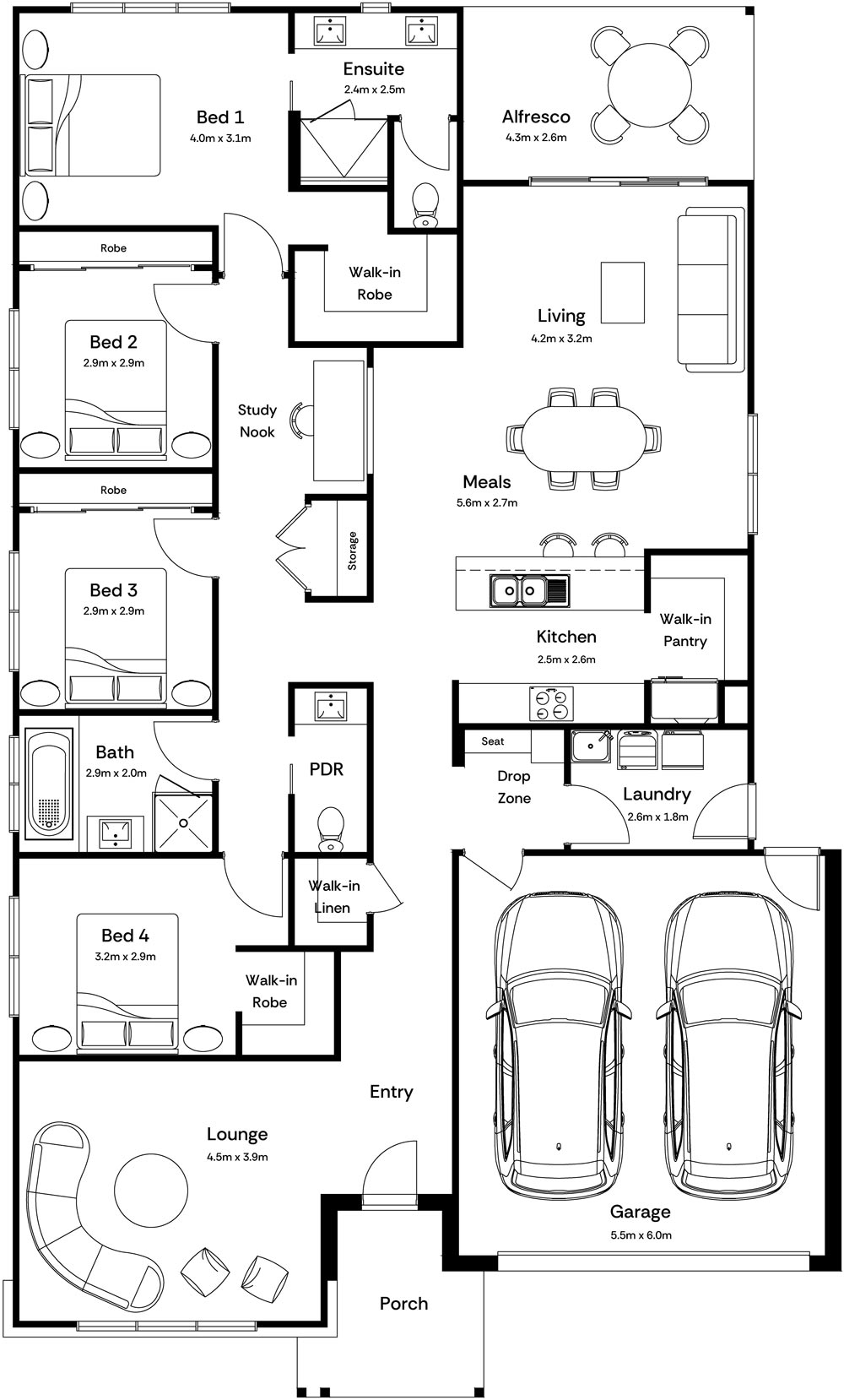
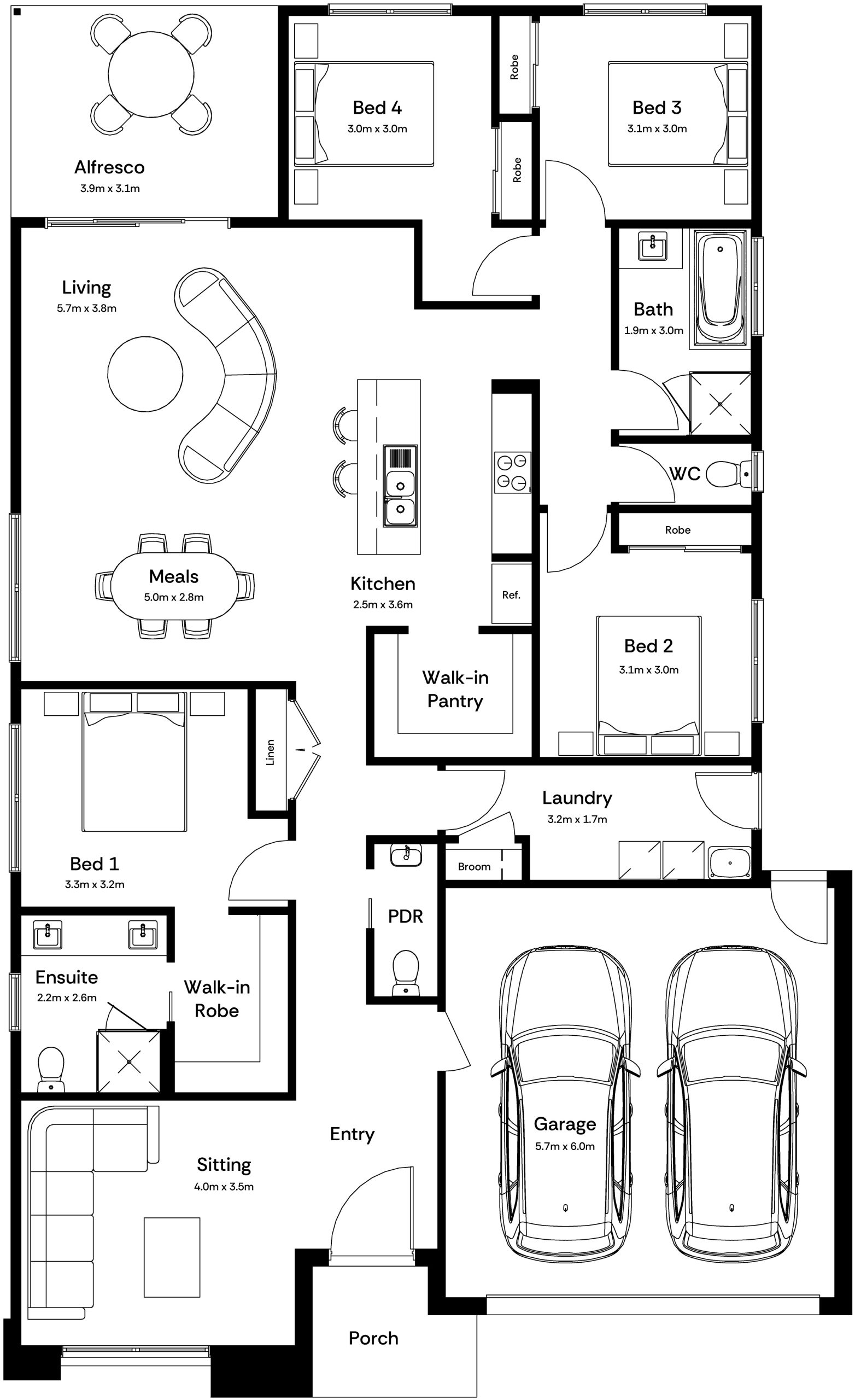
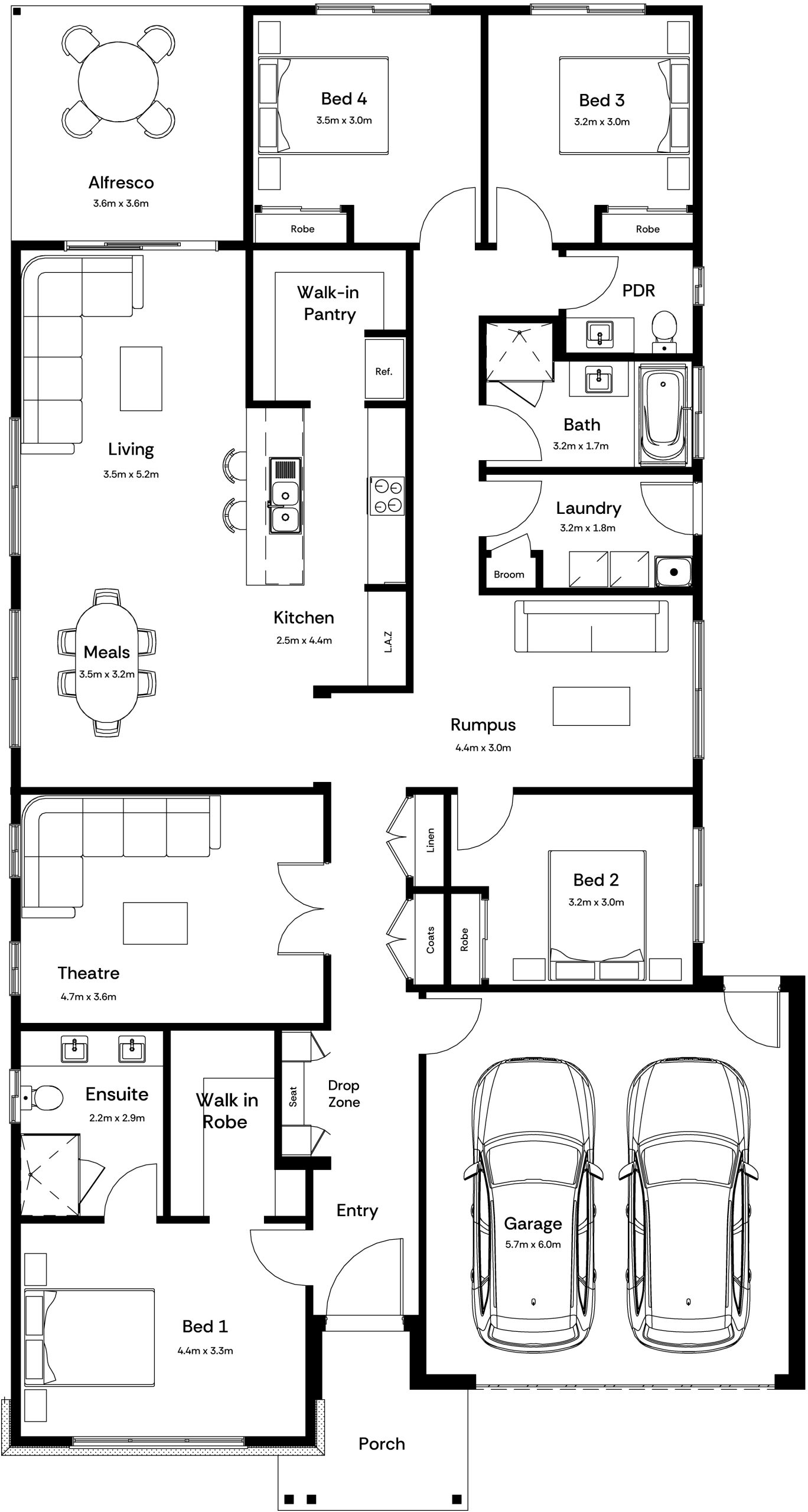
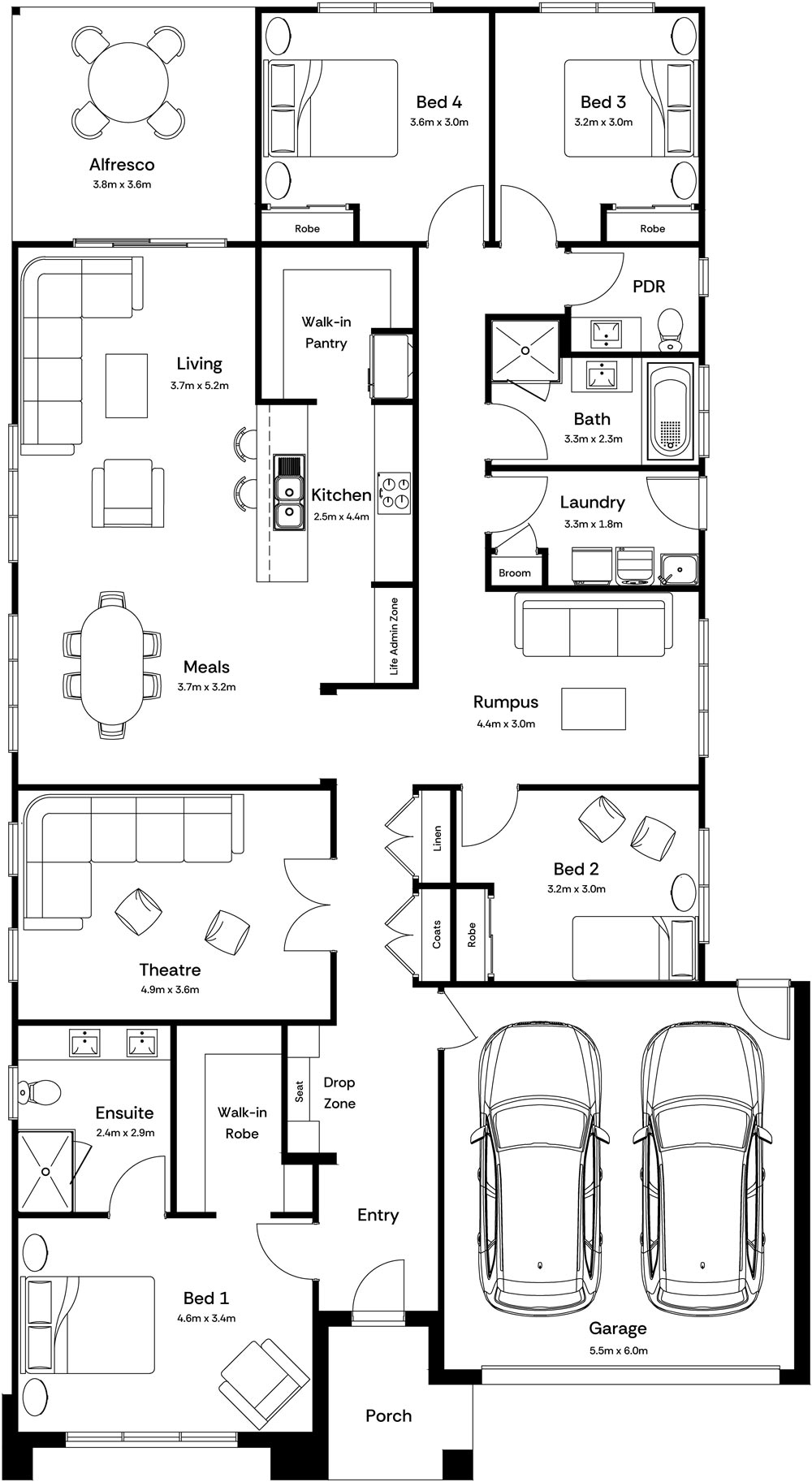
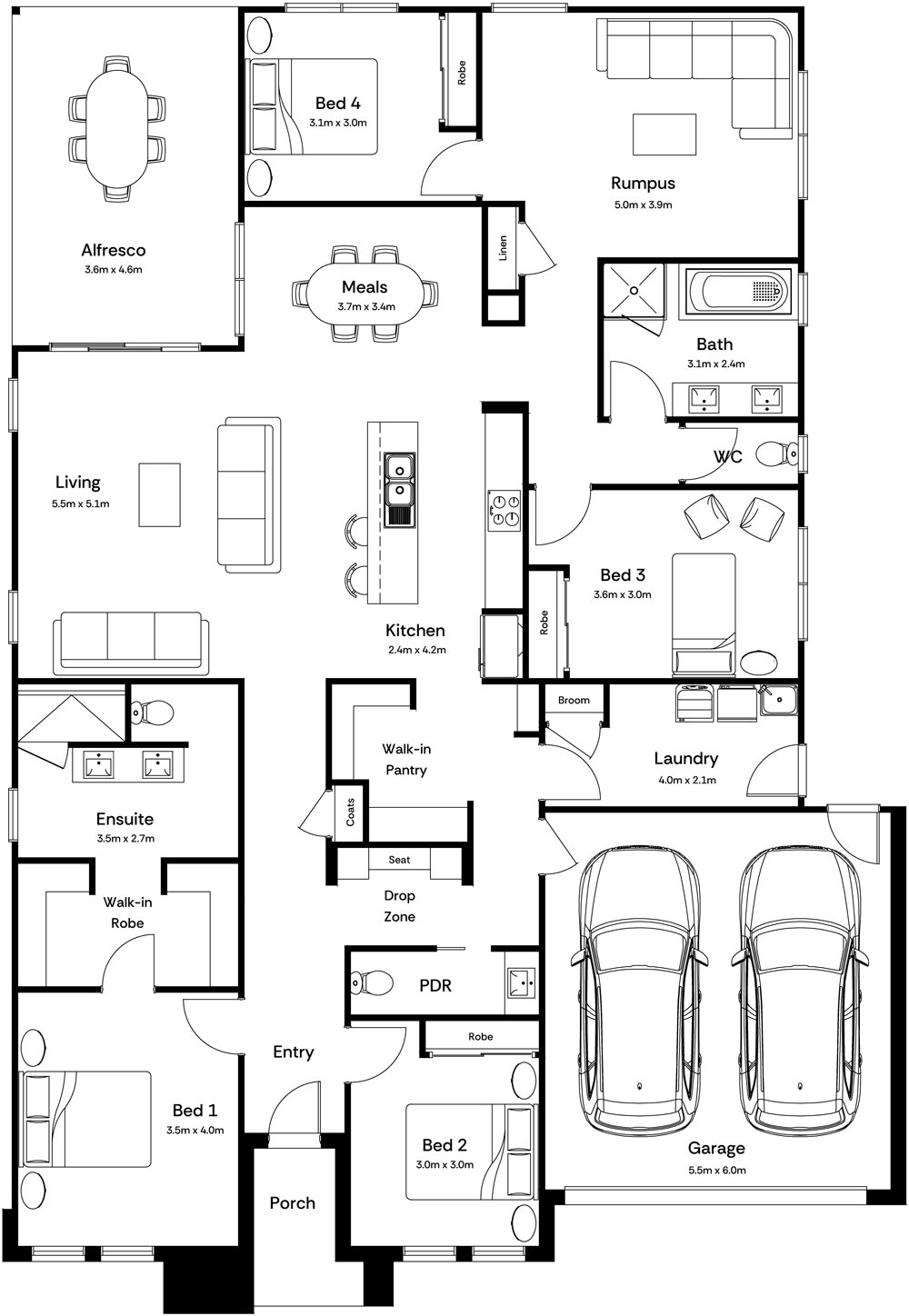
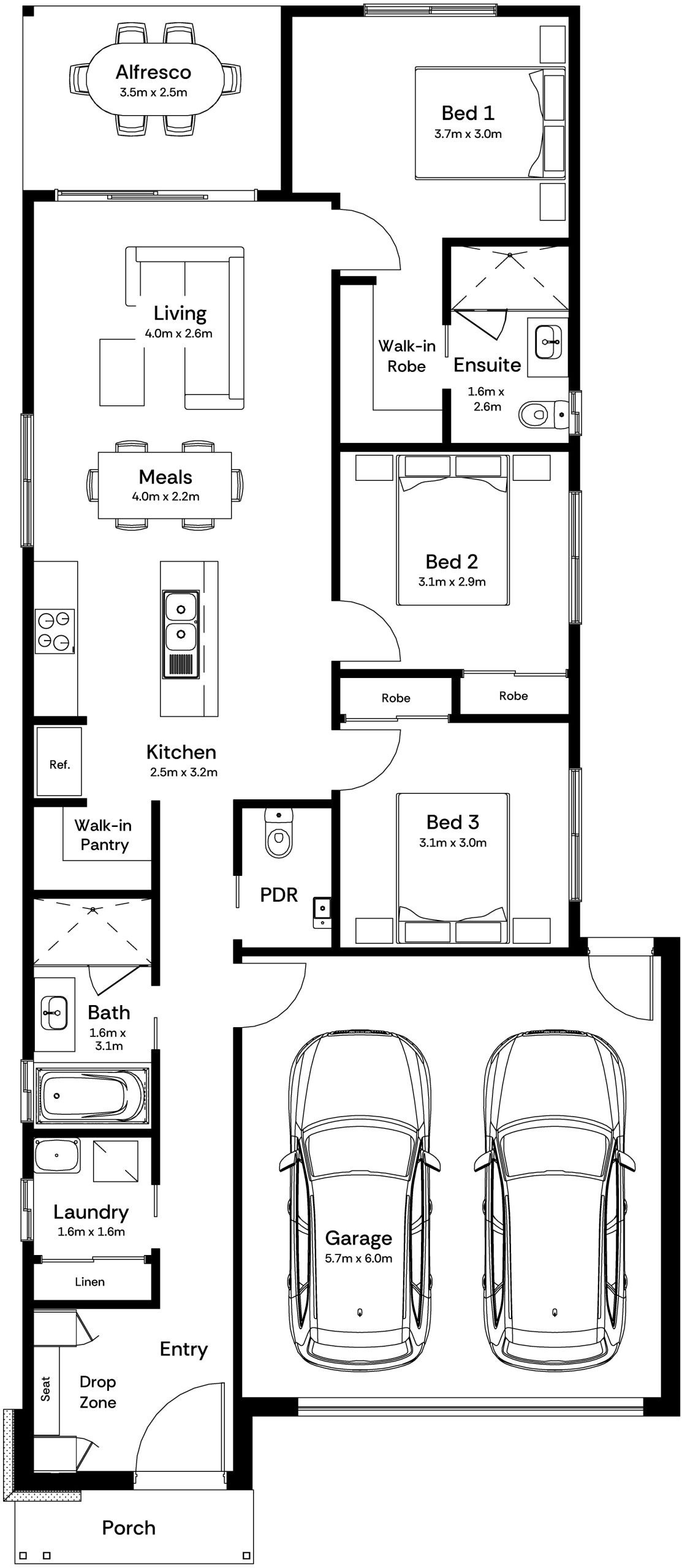
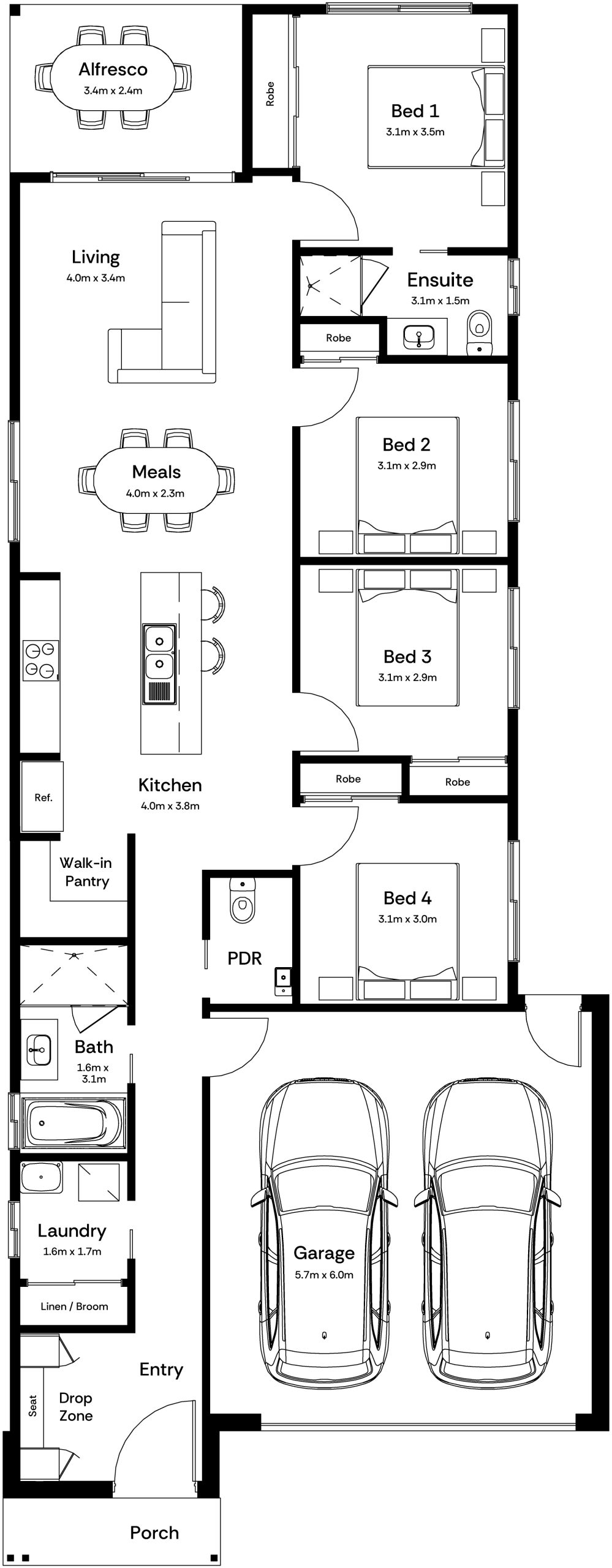
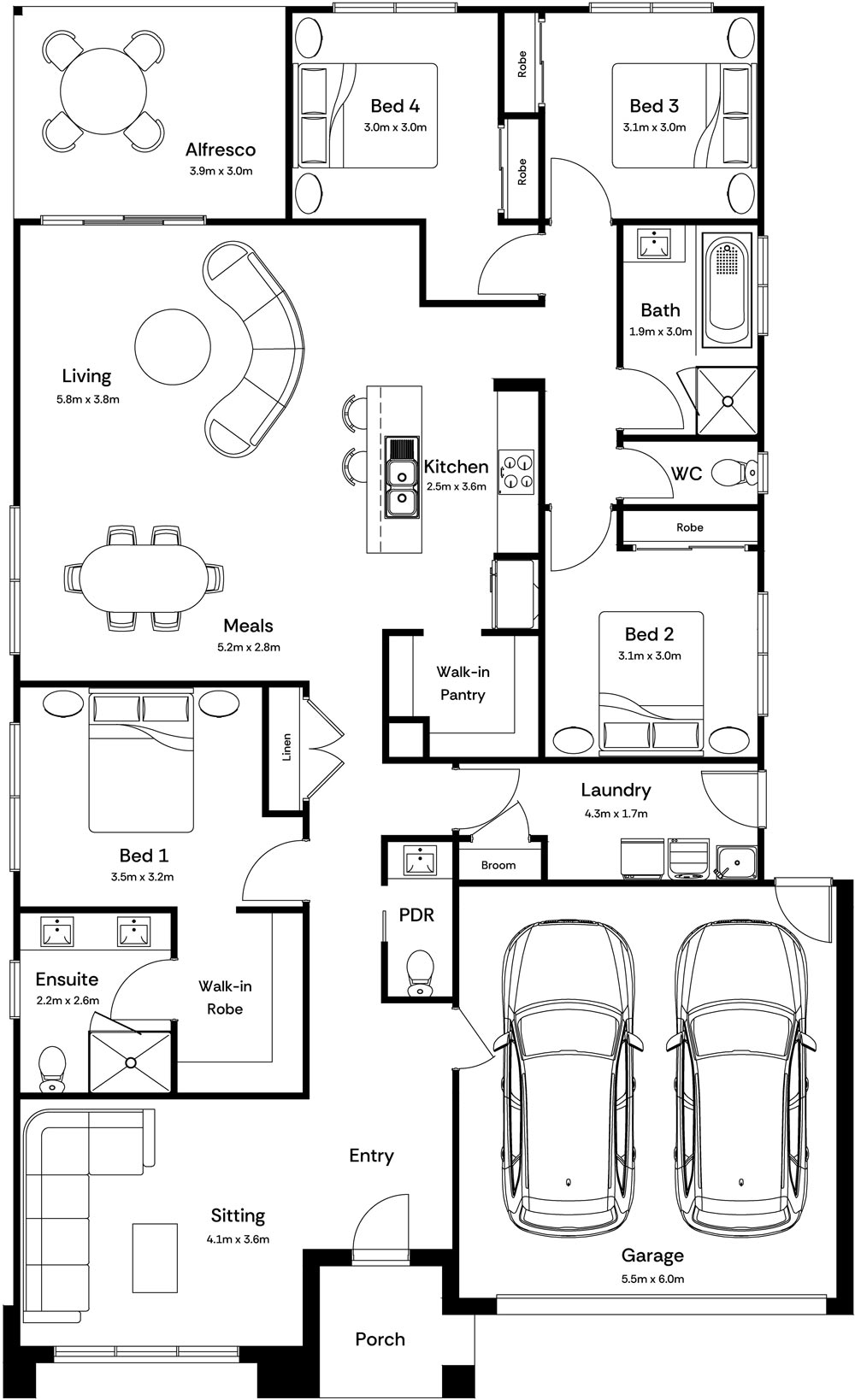
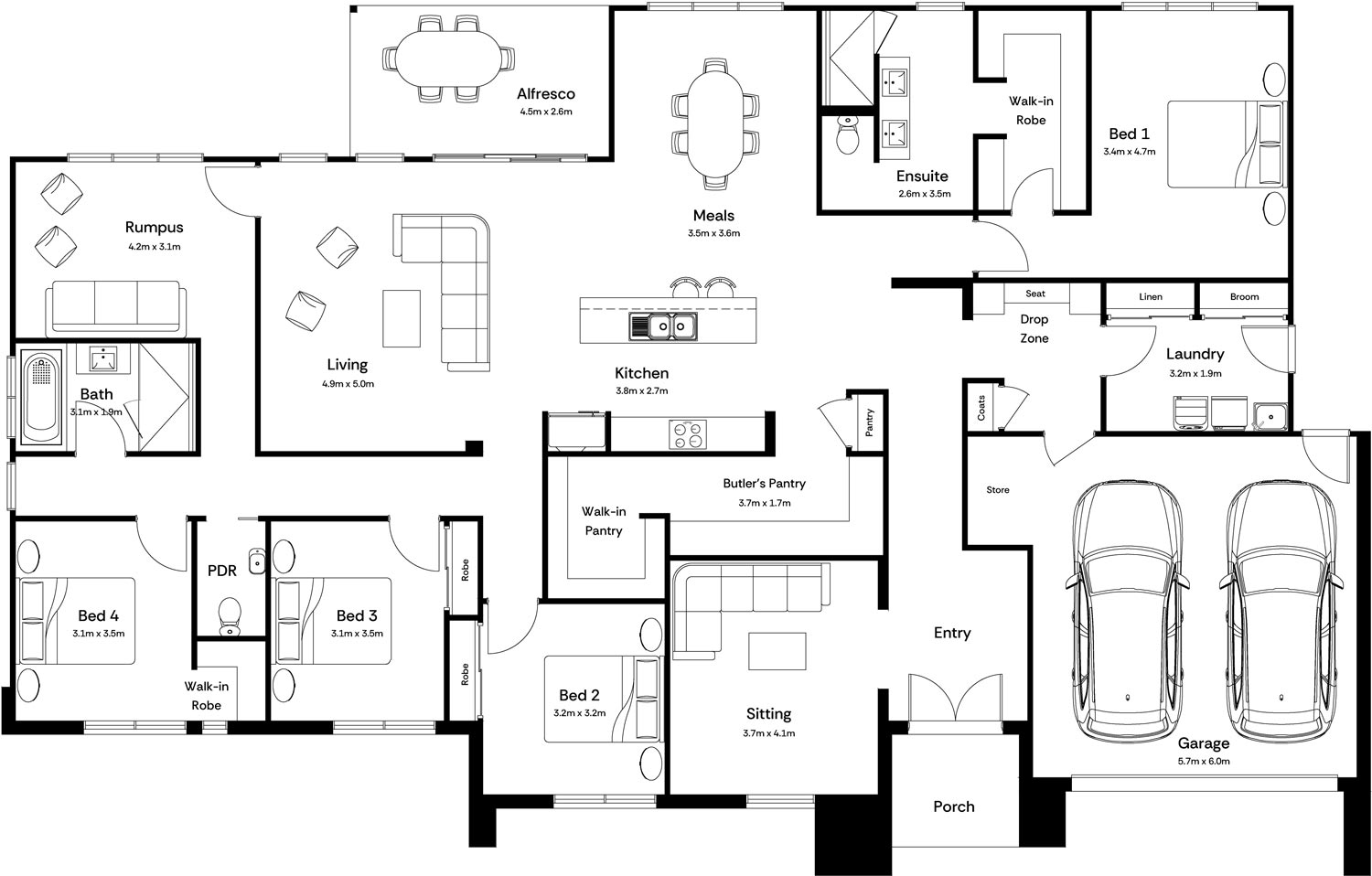
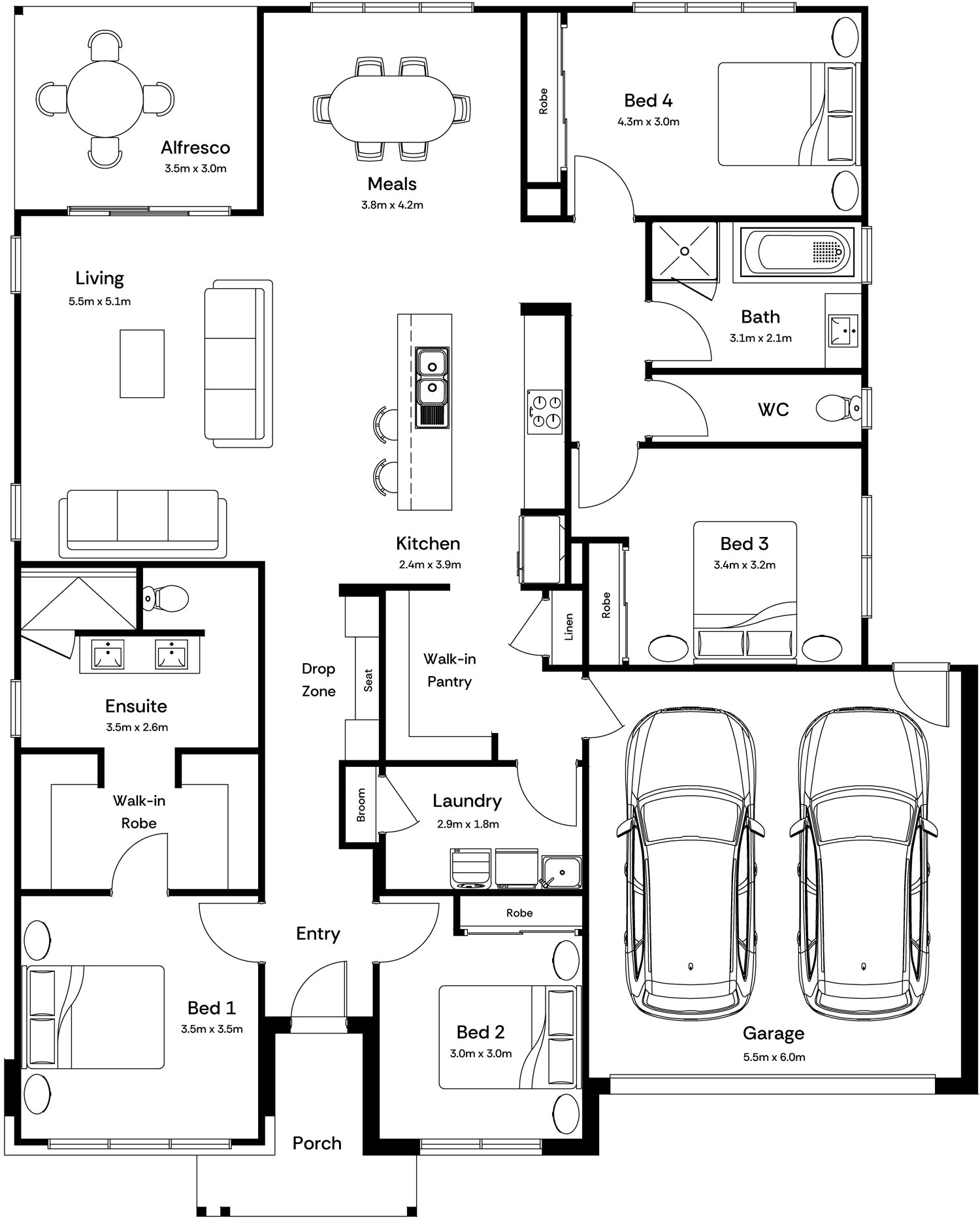
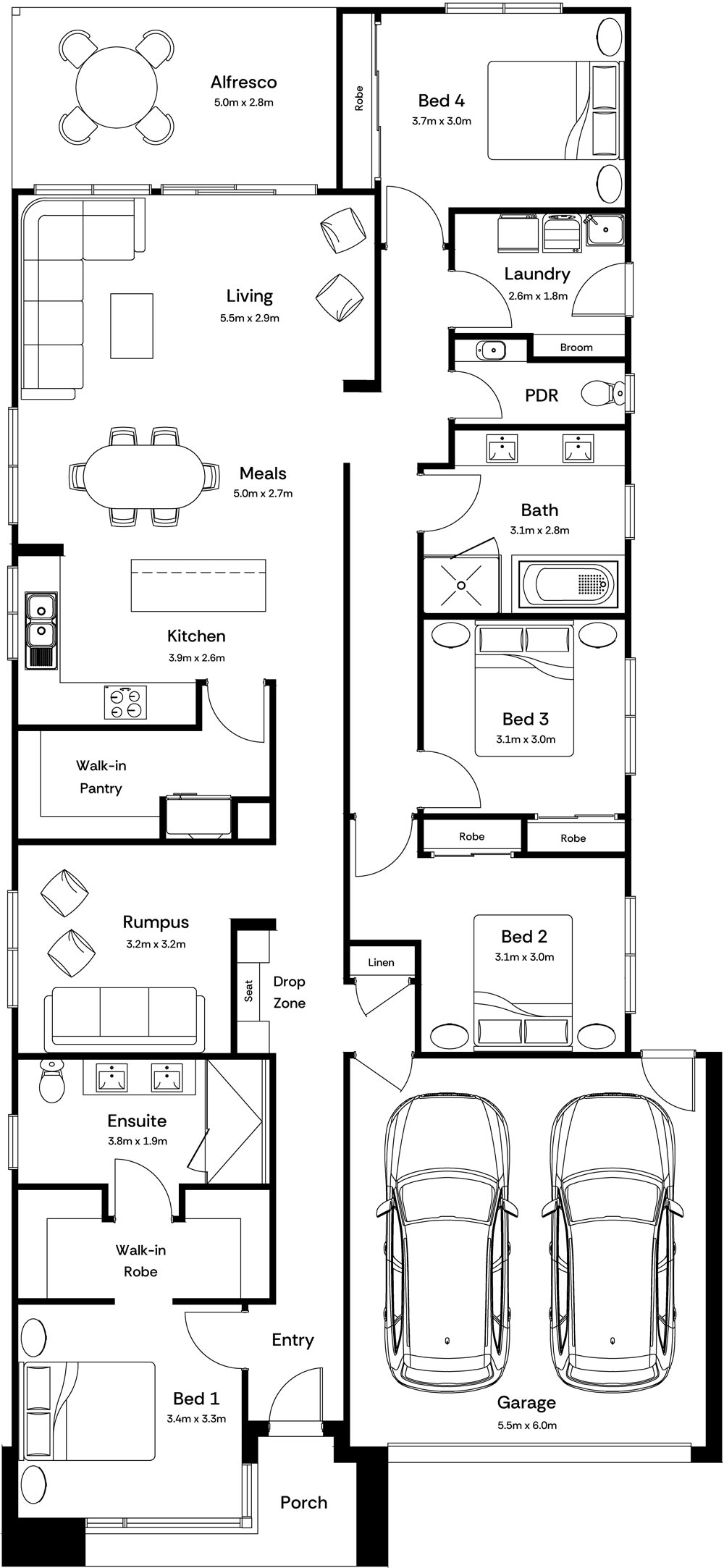
Mayde Homes’ Harlow is a good example. The standard design includes four bedrooms, but the current floorplan options also allow buyers to swap to three bedrooms and use the additional space to create a larger front lounge or living and meals area.
That is a useful way to think about the decision.
It is not always simply:
3 bedrooms = smaller home
4 bedrooms = bigger home
Sometimes the choice is:
Would I rather use this part of the house as another bedroom or make the spaces I use every day bigger?
That is a much better question.
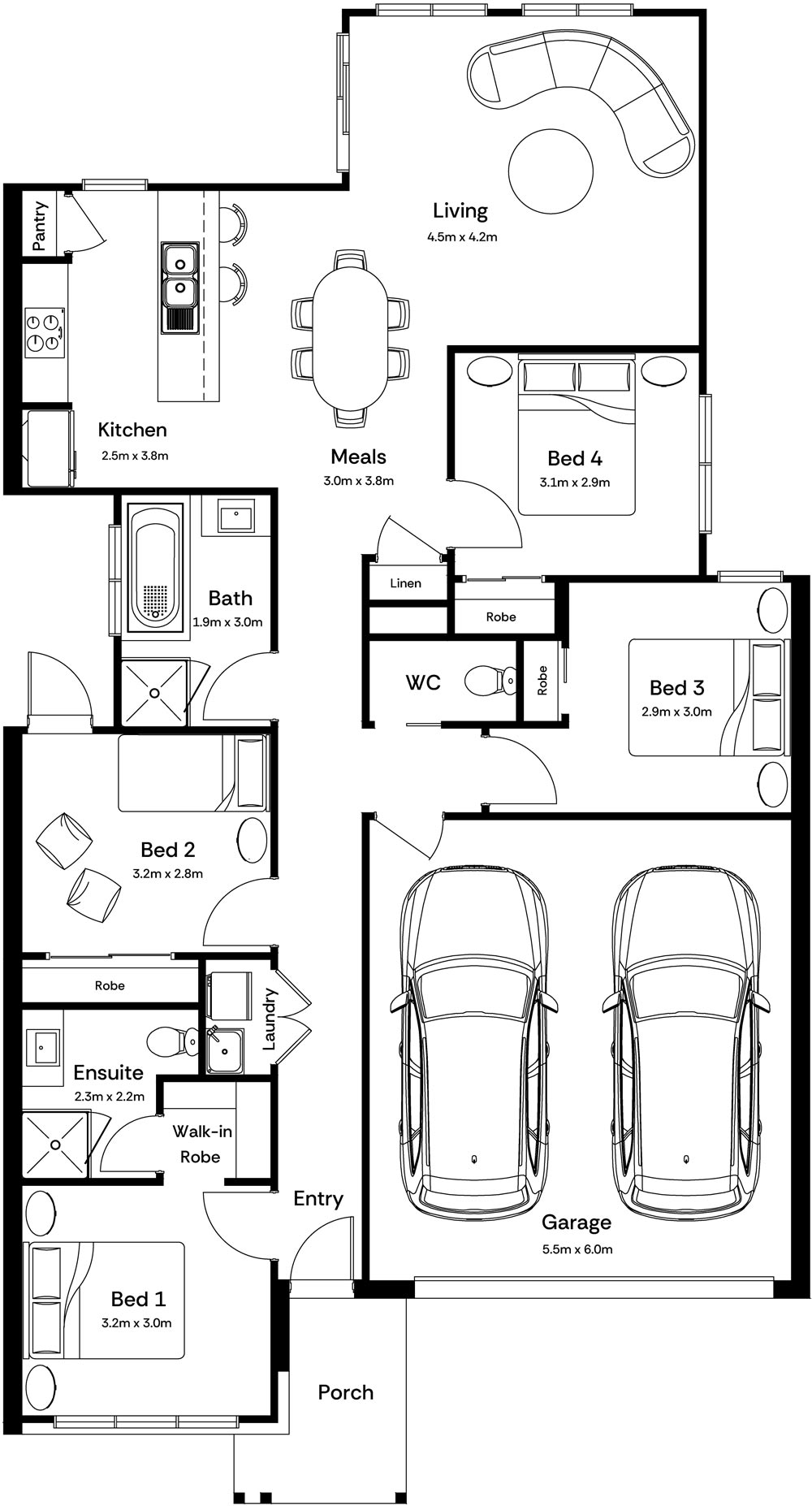
Harlow
Three bedrooms may suit you if…
A three-bedroom home may make more sense if:
You can still choose a larger three-bedroom home if you want more space overall.
Bedroom count and house size are not the same thing.
Four bedrooms may suit you if…
A four-bedroom home may make more sense if:
If you can already name what bedroom four will be used for, it is probably doing more than simply making the floorplan look impressive.
3 bedroom vs 4 bedroom at a glance
| Consider | 3 Bedroom | 4 Bedroom |
|---|---|---|
| Household size | Suits many smaller households | More room for larger or growing households |
| Home office | Spare bedroom can double as an office | Easier to keep an office separate from guest bedrooms |
| Guests | Works if one bedroom can remain flexible | More opportunity for a dedicated guest room |
| Block | More compact options may be available | Can require a larger footprint, although narrow-block options exist |
| Living space | May allow more space elsewhere | Depends on how the extra room is incorporated |
| Backyard | A smaller footprint may preserve more outdoor space | Larger designs may use more of the block |
| Flexibility | Spare bedroom can have multiple uses | Additional room provides another flexible space |
| Budget | May let you prioritise other things | Worth considering whether you will use the extra room |
The actual difference will depend on the two home designs you are comparing.
Try this before you decide
Give every bedroom in the floorplan a job.
Not a hypothetical job. An actual one.
For example:
If bedroom four remains a question mark after several attempts, that tells you something.
Now do the opposite.
Imagine choosing three bedrooms.
Where would guests stay? Where would you work? What happens if your household grows?
If that suddenly creates several obvious problems, that tells you something too.
You are not trying to pick the most bedrooms.
You are trying to pick the floorplan that solves the most real problems for your life.
3 bedroom vs 4 bedroom FAQs
Is a 3 bedroom house big enough for a first home?
It can be.
Three bedrooms can provide a main bedroom plus two flexible rooms for children, guests, working from home or other uses.
The overall home size and floorplan are just as important as the number of bedrooms.
Is it worth getting a 4 bedroom house?
It can be if you expect to use the additional bedroom.
Think about whether you need the room now, are likely to need it while living in the home or would genuinely use it as an office, guest room or other flexible space.
Should I build 3 or 4 bedrooms if I plan to have children?
Consider how many bedrooms you are likely to need while you expect to live in the home.
If you know your household is likely to grow, additional bedrooms can give you more flexibility. You still need to weigh that against your budget, block and the rest of the floorplan.
Do I need a 4 bedroom home for a home office?
Not necessarily.
A spare bedroom can double as an office, and some floorplans may have another area suitable for working from home.
Think about whether you need a permanently dedicated office or simply somewhere comfortable to work when required.
Can you build a 4 bedroom home on a narrow block?
Yes, depending on the home and block.
For example, Mayde Homes’ Carter provides four bedrooms and is designed for an 8.5m minimum lot width.
The block still needs to suit the individual home design and relevant site requirements.
Is a 4 bedroom home always larger than a 3 bedroom home?
No.
Bedroom count is only one part of a floorplan. Compare the total home size, room dimensions, living spaces, storage and overall layout rather than assuming the home with more bedrooms will feel larger.
Can I change a 4 bedroom floorplan to 3 bedrooms?
It depends on the home design.
Some designs have alternative configurations. Mayde Homes’ Harlow, for example, currently offers the option to swap from four bedrooms to three and use the additional space elsewhere in the home.
Choose the rooms you will actually use
Three bedrooms can be plenty.
Four bedrooms can be exactly what you need.
The number itself matters much less than what those rooms allow you to do.
Look at your household, your plans, your block and your budget. Then compare what happens to the rest of the floorplan when that fourth bedroom is added.
If you are going to use it, great.
If it is destined to become the room where unopened boxes live for the next seven years, you may prefer to put that space somewhere else.
Important information
Information on this page is general in nature. Home designs, dimensions, minimum lot widths, floorplan options and specifications can vary by location and may change over time. Always review the current plans and information for the specific Mayde Homes design and have your block assessed before making a final decision.
Information last reviewed: August 2026.